
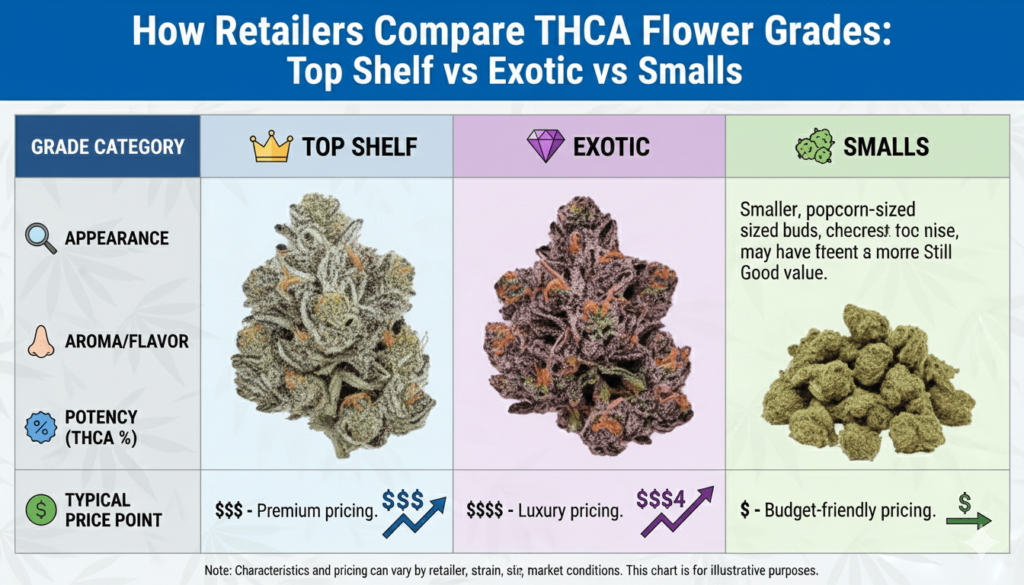
Walk into any THCa dispensary or browse online retailers, and you’ll encounter a bewildering array of quality classifications. One vendor’s “top shelf” might be another’s “mid-tier,” while “exotic” seems to mean everything from genuinely rare genetics to standard strains with colorful names. Meanwhile, “smalls” could represent exceptional value or a way to offload subpar product. Without understanding how retailers actually grade THCa flower—and what these classifications truly mean—you risk overpaying for marketing hype or missing genuine premium quality.
The THCa market has developed an unofficial grading system that combines objective factors (cannabinoid content, terpene profiles, cultivation method) with subjective elements (bag appeal, rarity, brand positioning). Understanding this system empowers you to evaluate whether that $180 “exotic” ounce justifies its premium over a $90 “smalls” option, or if you’re simply paying for aesthetics rather than actual quality.
This guide reveals exactly how retailers classify THCa flower grades, what distinguishes top shelf thca flower from mid-tier options, when exotic designations represent genuine value versus marketing, how smalls compare quality-wise to full-sized buds, and smart strategies for identifying the best value across all grade categories.
Understanding the THCa Flower Grading System
Unlike produce or diamonds, cannabis lacks a standardized, industry-wide grading system. Instead, retailers use informal classifications based on market conventions and their own positioning strategies.
The Standard Grade Categories
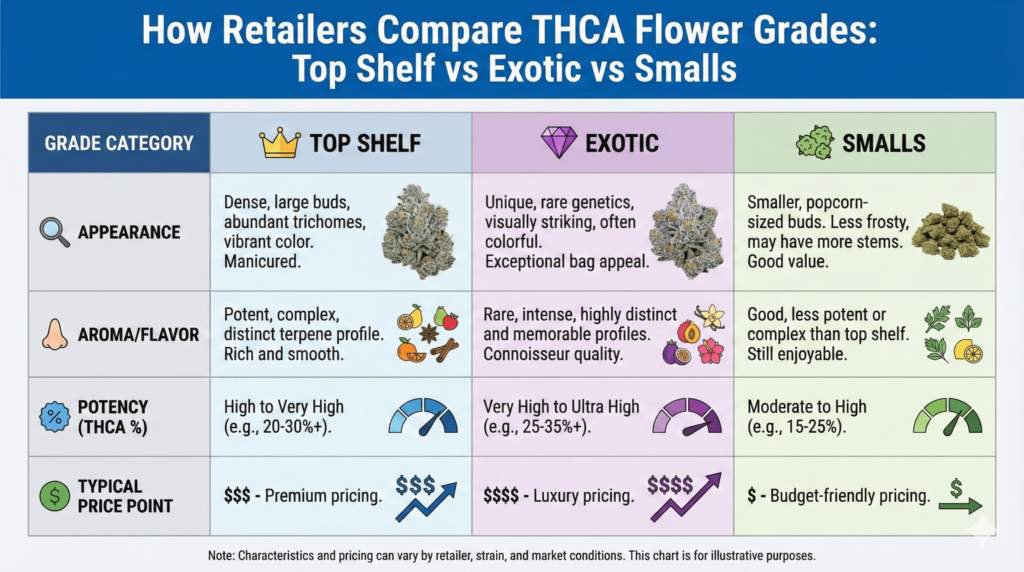
Top Shelf / Premium The highest quality tier representing the best a retailer offers. Characteristics include indoor cultivation with precise environmental control, THCa percentages typically 24-32%+, robust terpene profiles (2.5-5%+), exceptional bag appeal with dense structure and heavy trichome coverage, and minimal defects in trim, color, or structure.
Exotic / Craft Emphasizes unique genetics, rare terpene profiles, or limited availability rather than pure potency. Features proprietary or rare strain genetics, distinctive terpene combinations creating unique flavors, exceptional visual characteristics (unusual colors, structures), small-batch craft cultivation, and often commands premium pricing based on exclusivity.
Mid-Tier / Standard The workhorse category offering solid quality at accessible prices. Includes greenhouse or quality outdoor cultivation, THCa percentages 18-25%, respectable terpene profiles (1.5-3%), good overall quality without premium aesthetics, and represents best value-to-quality ratio for regular consumers.
Smalls / Popcorn / B-Buds Smaller flowers from the same plants producing top-shelf product. Characterized by reduced bud size (marble to grape versus golf ball to lime), same genetics and potency as full-sized counterparts, similar terpene profiles, slightly less bag appeal, and typically 30-50% price discount.
Budget / Value Entry-level pricing prioritizing affordability. Features older inventory, less popular strains, outdoor cultivation with variable quality, THCa percentages 12-20%, acceptable for price-conscious consumers or edible production.
What Drives Classification Decisions
Retailers assign grades based on multiple factors weighted differently by each operation:
Cultivation method (indoor premium > greenhouse > outdoor). Cannabinoid content (higher THCa commands higher tiers). Terpene profile (complexity and percentage matter). Visual appeal (color, structure, trichome coverage). Genetics and rarity (exotic strains justify premium positioning). Market positioning (brand strategy and target customer).
Understanding that grading involves both objective metrics and subjective positioning helps you evaluate classifications critically rather than accepting them at face value.
Top Shelf THCa Flower: What Justifies Premium Pricing
Top shelf thca flower represents the pinnacle of quality within a retailer’s inventory. But what actually separates top shelf from mid-tier beyond marketing labels?
Defining Characteristics of True Top Shelf
Cultivation Excellence Genuine top shelf comes from controlled indoor environments where every variable—temperature, humidity, light spectrum, CO2 levels, nutrients—is precisely optimized. Growers extend flowering periods (10-12 weeks vs. standard 8-9) allowing maximum cannabinoid and terpene development. Living soil or premium organic growing methods enhance terpene complexity.
Cannabinoid and Terpene Profiles Premium thca flower consistently tests 25-32%+ THCa with some phenotypes exceeding 35%. Total cannabinoid content matters—look for complementary cannabinoids creating entourage effects. Terpene percentages reach 2.5-5%+ with complex profiles featuring 8-12+ distinct terpenes rather than single-terpene dominance.
Physical Characteristics Top shelf exhibits dense but not compressed bud structure, minimal stem content (trim work preserves flower), vibrant strain-true colors, and exceptional trichome coverage creating a thick, frosty appearance with cloudy to amber trichome heads.
Cure and Presentation Proper curing (2-4+ weeks in controlled humidity) allows chlorophyll breakdown while preserving terpenes. The result is smooth smoke without harshness, full flavor expression matching terpene analysis, and optimal moisture content around 62% RH.
When Top Shelf Pricing Makes Sense
Vaporizer users benefit most from top shelf as vaporization preserves terpenes and showcases flavor profiles. Connoisseurs who appreciate exceptional flower and can discern quality differences find value in premium options. Special occasions warrant splurging on the finest available. Specific therapeutic applications requiring particular terpene profiles justify premium investment.
Top Shelf vs. Mid-Tier: Real Differences
Is a $140 top shelf ounce truly twice as good as a $70 mid-tier option? Not exactly. The relationship between price and quality isn’t linear. Top shelf delivers 15-25% higher THCa, 30-50% more complex terpenes, superior bag appeal and smoothness, but mid-tier often provides 80-90% of the experience at half the cost.
For daily consumption, mid-tier often represents better value. Reserve top shelf for when quality differences truly matter to your experience.
Exotic THCa Flower: Understanding the Premium
The “exotic” designation creates the most confusion in THCa grading. Some retailers use it interchangeably with top shelf, while others reserve it for genuinely unique genetics regardless of potency.
What Actually Makes Flower “Exotic”
Rare or Proprietary Genetics True exotic thca flower features genetics not widely available—proprietary crosses, limited phenotypes, or strains requiring specific cultivation expertise. Examples include original breeder cuts, phenotype hunts producing unique expressions, or crosses of rare parent genetics.
Unique Terpene Profiles Exotic designation often reflects unusual terpene combinations creating distinctive flavors unlike common strains. Think candy-sweet Runtz profiles, chocolate-nutty Truffle Butter, or tropical fruit-forward Zkittlez rather than standard pine/citrus/earth combinations.
Exceptional Visual Characteristics Stunning bag appeal distinguishes many exotics—unusual color expressions (deep purples, pinks, exotic greens), distinctive bud structures, or extraordinary frost coverage that photographs exceptionally well.
Limited Availability Small-batch craft cultivation, seasonal availability, or high demand with limited supply justify exotic positioning and pricing.
Top Shelf Exotic THCA: The Ultimate Tier
Some retailers create an ultra-premium category combining top shelf quality metrics with exotic genetics. Top shelf exotic thca represents the absolute pinnacle—rare genetics grown to perfection, maximum potency (28-35%+ THCa), exceptional terpenes (3-5%+), stunning visual presentation, and pricing often $150-200+ per ounce.
Examples include limited phenotypes of Runtz, rare cuts of Wedding Cake, exceptional Gelato expressions, or boutique breeder releases.
Is Exotic Worth the Premium?
Exotic pricing ($120-180/oz) versus standard top shelf ($90-140/oz) or mid-tier ($60-90/oz) requires honest assessment:
Worth it if you:
- Prioritize unique flavor experiences over pure potency
- Appreciate exceptional bag appeal and presentation
- Seek strains unavailable in commodity markets
- Can genuinely discern and value the differences
- Consider cannabis an enthusiast hobby worth premium investment
Skip it if you:
- Consume primarily via edibles (flavor becomes irrelevant)
- Prioritize effects over flavor/aesthetics
- Find mid-tier flower perfectly satisfactory
- Have budget constraints making premium pricing unrealistic
Finding Cheap Exotic THCA Flower
“Cheap” and “exotic” rarely coexist legitimately, but opportunities exist:
Seasonal closeouts when cultivators discontinue strains create $80-120 exotic pricing. Smalls from exotic genetics deliver the genetics and terpenes at 40% discounts. New vendor promotions introduce exotic strains at introductory pricing. B-stock from processors sells flower not pretty enough for retail but still exceptional quality.
Be skeptical of consistently cheap exotic thca flower under $80/oz—either it’s not genuinely exotic, or quality issues explain the discount.
Smalls and Popcorn Buds: The Value Proposition
Smalls represent one of the most misunderstood categories in THCa grading. Many consumers assume smaller buds mean lower quality, but this reflects aesthetics bias rather than chemical reality.
What Defines Smalls
Smalls (also called popcorn buds or B-buds) are smaller flowers typically developing lower on the plant or in areas receiving less direct light. Size ranges from pea to marble versus golf ball to lime for full-sized colas. These come from identical genetics and growing conditions as top-shelf counterparts.
The Quality Reality of Smalls
Here’s the critical insight most buyers miss: bud size has minimal impact on cannabinoid and terpene content. When sourced from quality cultivators, smalls contain nearly identical THCa percentages and terpene profiles to full-sized flowers.
Laboratory testing confirms this. Premium indoor smalls testing at 28% THCa come from the same plant producing 29% THCa colas. The 1% difference falls within normal testing variance and doesn’t reflect meaningful quality gaps.
What differs:
- Bud size and structure (smaller, sometimes less dense)
- Bag appeal (less impressive visually)
- Stem-to-flower ratio (slightly higher stem percentage)
What doesn’t differ:
- THCa and cannabinoid content
- Terpene profiles and flavor
- Effects and potency
- Smoke quality (when from quality sources)
Smalls Pricing and Value
Quality smalls typically price 30-50% below full-sized equivalents:
Top shelf smalls: $60-90/oz (versus $120-150 full-sized) Exotic smalls: $80-110/oz (versus $140-180 full-sized) Mid-tier smalls: $40-65/oz (versus $70-100 full-sized)
This pricing creates exceptional value propositions. You’re essentially paying less for the same product because it looks less impressive in a jar.
When Smalls Make Perfect Sense
Ideal applications:
- Rolling joints/blunts (you’re breaking it down anyway)
- Vaporizer use (bud size completely irrelevant)
- Personal consumption where aesthetics don’t matter
- Making pre-rolls or edibles
- Budget-conscious consumers prioritizing value
Skip smalls when:
- Gifting (presentation matters)
- Showing off to friends (bag appeal counts)
- You genuinely prefer breaking down large colas
- Reselling (aesthetics drive customer perception)
Quality Verification for Smalls
Not all smalls represent equal value. Verify you’re getting premium genetics at discount pricing versus low-quality flower being passed off as “smalls”:
Check the source: Reputable cultivators clearly identify smalls as coming from their premium grows.
Verify COAs: Cannabinoid and terpene testing should match or closely approximate their full-sized offerings.
Inspect physically: Should show good trichome coverage, proper moisture, and strain-appropriate aroma despite smaller size.
Compare pricing: If smalls cost 70%+ of full-sized pricing, the discount doesn’t justify potential trade-offs.
The Strongest THCA Flower: Potency Across Grades
When consumers seek the strongest thca flower, they typically focus on THCa percentage. However, potency exists across all grade categories—it’s not exclusive to top shelf.
Potency by Grade Category
Top Shelf: Typically 25-32%+ THCa, occasionally exceeding 35%
Exotic: Wide range 22-32% (potency isn’t the defining factor)
Mid-Tier: Generally 18-25% THCa
Smalls: Matches the full-sized counterpart (can be 25-32%+ when from premium sources)
Budget: Usually 12-20% THCa
Beyond THCa Percentage
True potency involves more than raw THCa numbers:
Total cannabinoid content including CBGA, CBCA, and others contributes to effects. Terpene synergy creates entourage effects amplifying cannabinoid impact. Freshness and cure quality affects how cannabinoids express during consumption. Individual biochemistry means a 25% strain might hit harder than a 32% strain depending on the person.
The “strongest” flower for you depends on your endocannabinoid system, tolerance level, and terpene preferences—not just the highest number on a COA.
Smart Shopping Strategies Across All Grades
Match Grade to Use Case
Use top shelf for: Vaporizing, special occasions, specific therapeutic terpene needs
Use exotic for: Unique flavor experiences, variety, impressive presentation
Use smalls for: Daily consumption, rolling, budget optimization
Use mid-tier for: Balanced quality and value, regular use
Quality Verification Checklist
Regardless of grade, always verify:
- Recent COA from accredited lab (within 3-6 months)
- Safety screening passed (pesticides, heavy metals, mold)
- THCa percentage and terpene profile align with claims
- Visual inspection matches expected grade characteristics
- Vendor reputation and customer reviews support claims
When to Splurge vs. Save
Splurge on premium grades when:
- Method of consumption showcases quality (vaping)
- You genuinely appreciate and can discern differences
- Special occasions warrant exceptional flower
- Specific terpene profiles address therapeutic needs
Save with smalls/mid-tier when:
- Daily consumption where variety matters more than peak quality
- Making edibles (extraction eliminates grade differences)
- Budget prioritization without sacrificing safety or basic quality
- Testing new strains before premium commitment
Conclusion: Navigating THCa Grades Intelligently
Understanding how retailers classify THCa flower grades—and what these classifications actually mean—transforms you from a passive consumer accepting marketing claims into an informed buyer making value-based decisions.
Key takeaways:
- Top shelf delivers peak quality but represents diminishing returns versus mid-tier
- Exotic emphasizes unique genetics and flavors, not always maximum potency
- Smalls offer identical genetics and potency at 30-50% discounts when sourced properly
- Potency exists across all grades—strongest thca flower isn’t exclusive to premium tiers
- Match grade to use case rather than defaulting to highest or lowest tiers
The best grade for you depends on consumption method, budget, and what you genuinely value in flower. Most consumers find optimal value mixing premium grades for special use with smalls or mid-tier for regular consumption.
Ready to optimize your purchases? Identify your primary use cases, test one option from each grade category, and track which delivers the best experience relative to cost. What’s your go-to grade, and why? Share your insights in the comments.