A THCA certificate of analysis (COA) is an independent lab report that confirms the cannabinoid content and safety of THCA flower. Knowing how to read a THCA certificate of analysis allows buyers to verify legal compliance, product quality, and safety before making wholesale or retail purchases.
What is a THCA Certificate of Analysis (COA)?
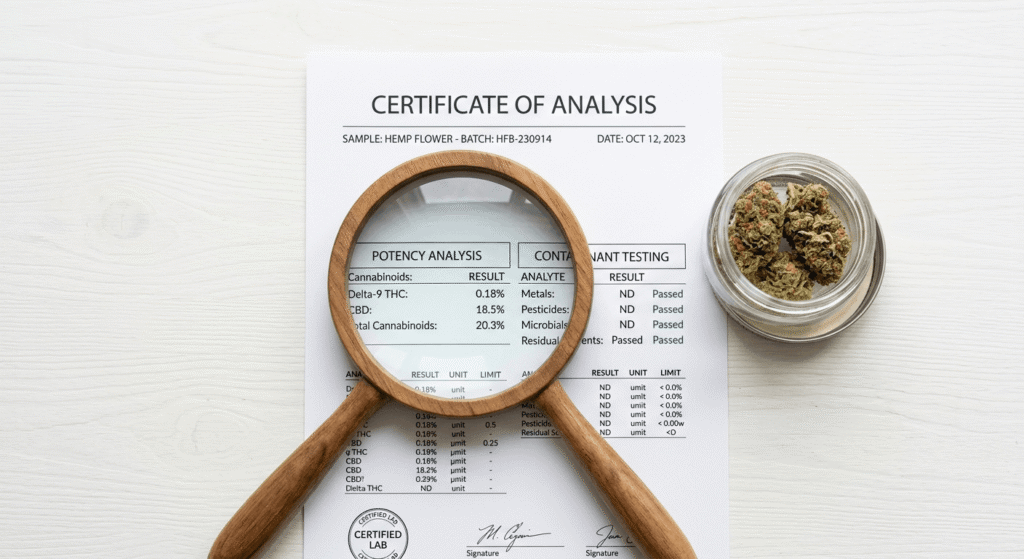
A THCA certificate of analysis (COA) is a lab-issued document that details the cannabinoid profile, contaminant content, and overall safety of a batch of THCA flower. Conducted by an independent, accredited laboratory, this certificate verifies compliance with legal standards and confirms the hemp product is free from harmful substances. For wholesale and retail buyers, a transparent hemp COA is essential for legality and safety.
What is THCA Flower?
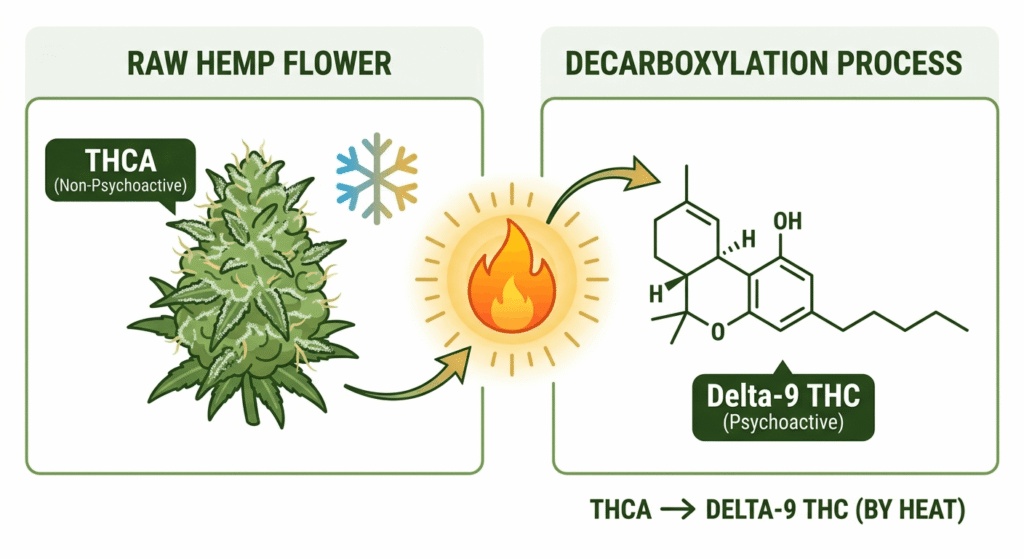
THCA flower is raw hemp flower abundant in tetrahydrocannabinolic acid (THCA), a non-psychoactive cannabinoid. When heated, such as during smoking or vaporization, THCA converts into Delta-9 THC, the psychoactive compound in cannabis. For flower to qualify as THCA hemp, it must originate from hemp and contain less than 0.3% Delta-9 THC by dry weight, meeting federal definitions.
This distinguishes THCA flower from broad-spectrum hemp, which is often higher in CBD and lacks the potent, marijuana-like experience that draws consumers to THCA strains. Sellers of lab tested THCA flower, such as reputable brands found in Flowers, always supply a valid hemp COA to demonstrate legal compliance and cannabinoid content.
Why Lab Tested THCA Flower Matters
Buying lab tested THCA flower ensures that each product batch has undergone scrutiny for potency, purity, and safety by an accredited laboratory. This diligent process is much more than branding. It provides legal assurance and protects end consumers from harmful contaminants.
Properly lab tested THCA flower must show the advertised cannabinoid percentages and fall below the crucial 0.3% Delta-9 THC threshold set by the 2018 Farm Bill. For wholesale buyers and those selling to retailers, reliable third-party analysis helps avoid legal trouble and ensures the absence of harmful agents, such as pesticides, heavy metals, microbial contamination, and residual solvents.
When dealing with thca flower wholesale platforms or evaluating wholesale pricing schemes like those seen on Wholesale Pricing, only trust vendors who present clear and up-to-date COAs. In the absence of transparent documentation, buyers face unnecessary compliance risks and potential threats to consumer safety.
Key Elements of a Hemp COA
Understanding how to interpret a hemp COA is crucial for buyers seeking lab tested THCA flower or CBD certificate products. Standard certificates of analysis typically provide:
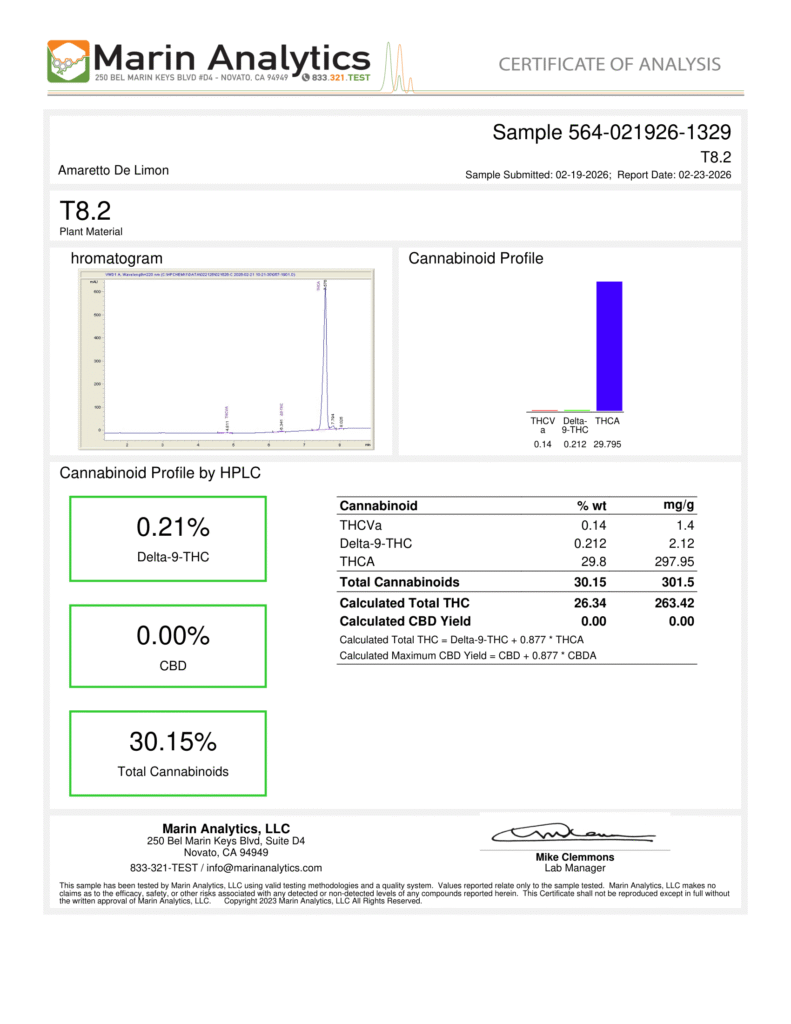
- Cannabinoid Profile: This section reveals percentages of THCA, Delta-9 THC, CBD, total cannabinoids, and sometimes minor ones such as CBG and CBC.
- Delta-9 THC Thresholds: Indicates that the Delta-9 THC content is under 0.3% by dry weight, confirming hemp status.
- Total THC Calculation: This is often displayed using Total THC = Delta-9 THC + (THCA x 0.877), demonstrating potential psychoactivity after heating.
- Contaminant Panel: Lists detected amounts (or non-detectable levels, marked as “ND”) for pesticides, heavy metals (like lead, mercury), mold/mycotoxins, and residual solvents. Results must fall below strict action limits.
- Lab Credentials: A reliable COA displays the lab’s name, contact details, recognition or accreditation (such as ISO/IEC 17025), and sometimes a QR code or signature for authenticity.
- Batch and Product Data: Every COA needs to have a batch or lot number, harvest date, and product name/strain, all matching your purchase.
These elements make the COA the definitive document for confirming thca flower authenticity and legality.
Full-Panel vs. Potency-Only Testing
A full-panel COA includes not only cannabinoid content but also a complete contaminant screen. If the COA only lists cannabinoids and omits pesticides or heavy metals, it is incomplete and should signal caution for buyers seeking truly safe products.
Testing Method Matters: HPLC vs. GC
High-Performance Liquid Chromatography (HPLC) is the method of choice for THCA flower COAs. Unlike Gas Chromatography (GC), which breaks down THCA and cannot distinguish it from THC, HPLC properly reflects the cannabinoid breakdown. Always check the methods section to confirm HPLC was used.
Step-by-Step: How to Read a THCA Certificate of Analysis
Reading a THCA COA is a sequential process, ensuring each element aligns with your wholesale or retail buying requirements:Verify the COA’s Authenticity
- Verify the COA’s Authenticity
Confirm the presence of a lab name, ISO/IEC 17025 accreditation, and third-party status. The analysis date should be recent—ideally within the last year. Check for QR codes or links for online verification. Make sure the batch number and strain match your product exactly. - Examine the Cannabinoid Profile
Locate the THCA, Delta-9 THC, and the Total THC values. Delta-9 THC must be at or below 0.3% by dry weight. After November 2026, many jurisdictions also require the Total THC (THCA x 0.877 + Delta-9 THC) to be under 0.3%. Other cannabinoids such as CBG or CBC often appear in lower concentrations and can indicate strain uniqueness. - Assess the Contaminant Panel
Review the results for pesticides, heavy metals, mycotoxins, and solvents. All should be “ND” (Not Detected) or safely under regulatory limits. Any absence of contaminant data or result higher than allowed should prompt caution. - Evaluate Lab Methods and Accreditation
Confirm the lab used HPLC for accurate results. Labs must explain their analysis method, and a mention of ISO/IEC 17025 is a major trust signal. - Cross-Check Product Integrity
Double-check that the batch number, harvest date, and description line up between the COA and your flower or package. If discrepancies arise, request a new COA or avoid the purchase. - Watch for Red Flags
Extremely high THCA levels (over 35–40%) may signal altered or falsified reports. A missing batch number, generic COA reused on many strains, or missing safety data raise immediate issues.
How to Spot Untrustworthy THCA COAs
Sometimes, a COA appears incomplete or suspicious. Any absence of crucial sections, outdated dates, or non-matching batch information should lead you to question a supplier’s reliability.
Leveraging Third-Party Resources
Industry resources and reference guides can provide additional confidence and learning material for buyers navigating COA interpretation.
How to Identify a Verified THCA Supplier
Selecting a verified thca supplier requires attention to more than price. Only trust vendors who provide prompt, detailed, batch-specific, and current COAs. Here is what to look for:
- Full Transparency: Reputable suppliers publish up-to-date COAs for all THCA flower and other products directly on product pages, such as their Shop or Lab Results sections.
- Supplier Accreditation: The laboratory must be ISO/IEC 17025-accredited, entirely independent, and clearly identified on every hemp COA. Evidence of partnerships with state agencies or regulatory endorsement are positive signs.
- Fresh Documentation: Every batch comes with a COA that is less than one year old. Out-of-date certificates should never be accepted.
- Batch-Specific Details: Each THCA flower COA is tied to the specific product lot, never reused across unrelated strains or batches.
- Responsive Customer Service: Sellers eager to clarify COA data and compliance rules indicate strong business ethics.
- Industry Recognition: Established wholesale vendors referring to respected brands often embody high industry standards.
Red flags indicating an unreliable supplier include: refusal to share COAs, missing contaminant panels, lack of batch-specific data, and self-conducted laboratory testing without outside verification.
How to Find Wholesale Opportunities
For those planning large-scale thca flower wholesale purchases, consulting the Wholesale Pricing and About pages of potential suppliers can reveal their business practices and compliance standards.
Comparing THCA COAs vs CBD Certificates
Many buyers encounter both THCA and CBD certificate types. Understanding the differences streamlines your compliance checks and purchasing decisions. Review the table below for clarity:
| Feature | THCA COA | CBD Certificate |
|---|---|---|
| Main Focus | THCA, Total THC, Delta-9 THC, contaminant screening | CBD content, Delta-9 THC, contaminant screening |
| Compliance Requirement | Under 0.3% Delta-9 THC (Total THC by late 2026) | Under 0.3% Delta-9 THC |
| Psychoactive Indicator | Measures THCA and Total THC post-decarboxylation | Focuses on non-psychoactive CBD |
| Typical Use | Smoking or extraction (THCA flower) | Oils, tinctures, edibles, topicals |
| Red Flag Checklist | Excessively high THCA, missing lab accreditation, old safety data | Overstated CBD, omitted THC, missing contaminants |
| Vital For | Wholesale buyers meeting new THC rules | Retail and wholesale CBD product screening |
Both COAs and CBD certificates should be supplied by ISO/IEC 17025-accredited labs and must include detailed testing for all relevant contaminants to ensure full confidence in the product.
Common Mistakes When Reading a THCA COA
Wholesale and retail buyers often make preventable errors reviewing COAs. The following are the most common pitfalls to avoid:
- Ignoring Total THC: Only looking at the Delta-9 THC percentage and neglecting to calculate total THC can inadvertently result in buying non-compliant flower, especially under newer regulations where “Total THC” becomes the primary legal standard.
- Disregarding Batch Numbers: Accepting COAs without an exact match to the batch or strain you receive undermines traceability and authenticity, letting fraudulent practices slip through.
- Skipping the Safety Panel: Evaluating only potency and ignoring full contaminant results opens the door to possible pesticide, mold, or heavy metal exposure.
- Trusting Outdated Reports: Using stale COAs, sometimes months or years old, can put buyers at risk as cannabinoid content may degrade or change during storage.
- Accepting Exaggerated Potency: Question THCA values much higher than the industry range of 15–30%. Overly high numbers often hint at falsified data.
- Missing Lab Accreditations: Only trust reports from third-party, ISO/IEC 17025-accredited labs. Internal or unaccredited COAs do not offer external assurance.
Double-checking each of these areas will protect your business and your customer’s safety, ensuring the products meet all regulatory benchmarks.
Training Staff to Read COAs
Consider offering internal education programs or sharing official reference materials such as those found on the Blogs page of respected THCA flower wholesale platforms. Well-trained staff can spot errors and red flags during the procurement process.
Decision Guide: Tips for THCA Flower Wholesale Buyers
If you’re sourcing THCA flower wholesale or evaluating new suppliers, use this practical checklist to maintain compliance:
- Always request a recent, batch-specific COA for each product and format you buy.
- Independently verify all lab and supplier credentials. Use the lab’s website or contact details to confirm ISO/IEC 17025 accreditation.
- Check your destination market’s latest compliance rules, as new federal and state regulations after late 2026 standardize both Delta-9 and Total THC limits at under 0.3%
- Review all product and lot info for consistency across invoices, packaging, and COAs. Discrepancies demand clarification from the supplier.
- Archive every COA associated with your purchases for at least two years. Regulatory audits and resale partners often require proof of documentation.
- Begin wholesale relationships with small sample orders. Assess the quality and documentation before scaling purchases.
- Stay informed by monitoring industry best practices, new lab methodologies, and evolving compliance regulations.
Engaging only with verified thca suppliers who provide transparent documentation is foundational for safe, legal, and profitable business in the THCA flower wholesale market.
Frequently Asked Questions about THCA COAs
– -What counts as a compliant THCA flower?
A compliant THCA flower batch tests under 0.3% Delta-9 THC by dry weight per the 2018 Farm Bill. As of November 2026, both federal and many state laws require “Total THC” (the sum of Delta-9 THC and converted THCA) also stay under 0.3%. This must be confirmed by a third-party, ISO/IEC 17025-accredited lab.
2 How can I verify that a COA is authentic and up-to-date?
You can verify a certificate of analysis by ensuring the lab’s name and accreditation are shown, product batch numbers match your order, and the report is no older than 6–12 months. Many labs provide a QR code or direct verification link for added security.
3 What is the difference between THCA and Delta-9 THC on the COA?
THCA is the non-intoxicating precursor to THC, found naturally in raw hemp. Delta-9 THC is the psychoactive compound that appears after decarboxylation (heating). Both cannabinoids are listed on the COA, which often calculates “Total THC” as Delta-9 THC plus THCA times 0.877 to reflect the transformation that occurs during use.
4 Which contaminants should I look for on a lab-tested THCA flower COA?
Look for listings or panels on pesticides, heavy metals (such as lead, cadmium, mercury, arsenic), mycotoxins and molds, and residual solvents. Each contaminant should be “ND” or below industry-regulated action limits. Only accept full-panel data from certified labs on your hemp COA for the safest flower purchases.
5 Are all hemp COAs the same, or do they vary by lab?
While legitimate COAs must follow regulatory and accreditation guidelines, the format and presentation differ by lab. True ISO/IEC 17025-accredited labs always include full contaminant and cannabinoid data, as well as method details. Differences in layout are normal, but all necessary information should appear regardless of lab style.
Conclusion
Knowing how to read a THCA certificate of analysis (COA) is vital for any wholesale or retail buyer aiming to source thca flower or other hemp-based products safely and legally. By understanding COA essentials—from cannabinoid profiles and contaminant panels to valid lab credentials—you can confidently select compliant, high-quality products and avoid costly mistakes. Always choose a verified thca supplier who offers transparent, up-to-date, batch-specific COAs, and keep diligent records to protect your business in the evolving thca flower wholesale landscape.