Quick Answer Box: Farm Bill compliant THCa refers to THCa products sourced from hemp that contain no more than 0.3% Delta-9 THC by dry weight, as defined by the 2018 Farm Bill. Retailers must verify compliance, source from trusted wholesalers, secure certificates of analysis, and stay alert to state and federal law changes, especially before the 2026 “total THC” standard takes effect.
What is Farm Bill Compliant THCa?
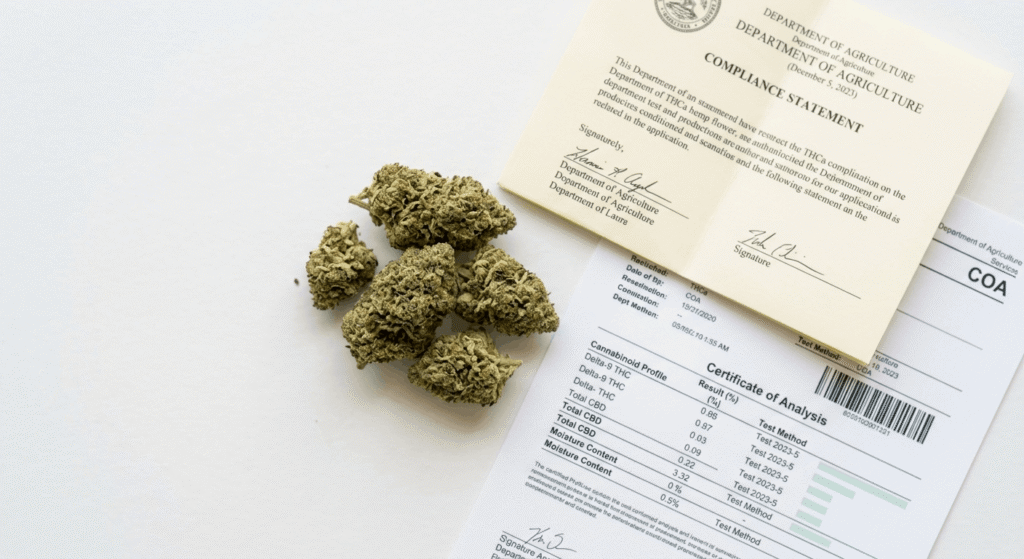
Farm Bill compliant THCa refers to high-THCa hemp products that adhere to the legal definition of hemp set forth in the 2018 Farm Bill. Specifically, these products come from cannabis plants with no more than 0.3% Delta-9 THC by dry weight. This definition is the cornerstone of federal compliance in the United States. However, THCa compliance does not end at the federal level; many states implement stricter rules, and these can impact retailers’ operations on a local basis. As a result, being farm bill compliant is a critical issue in the evolving cannabis marketplace.
Understanding THCa
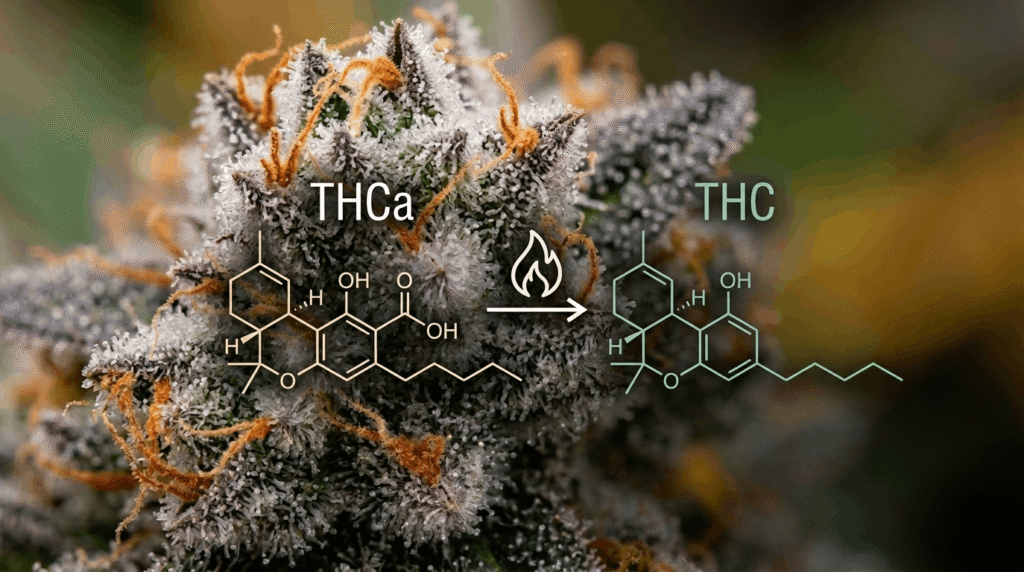
Tetrahydrocannabinolic acid (THCa) is a naturally occurring cannabinoid in raw, unheated hemp and cannabis plants. Unlike Delta-9 THC, THCa is non-psychoactive and does not intoxicate users the transformation to psychoactive Delta-9 THC only happens via decarboxylation, such as through heat from burning, vaping, or baking.
THCa is valued both as a raw supplement and as a precursor for Delta-9 THC, and consumers often seek out products high in THCa for potential therapeutic benefits. These may include anti-inflammatory, neuroprotective, and anti-emetic effects, though scientific studies are still emerging. For retailers, it is important to distinguish THCa from Delta-9 THC and to ensure all products are supported by comprehensive Certificates of Analysis (COA) to confirm their legal status and cannabinoid profile before reaching shelves.
THCa vs THC
THCa and THC differ in both chemical structure and legal treatment. THCa features an added carboxyl group, which makes it non-intoxicating in its raw state. Upon decarboxylation, which occurs when heat is applied, THCa becomes Delta-9 THC—the compound responsible for cannabis’ psychoactivity.
Legal Distinction Between THCa and Delta-9 THC
From a compliance perspective, the 2018 Farm Bill defines hemp based solely on the Delta-9 THC content, not taking THCa into account at the federal level. However, several states and new federal regulations effective November 2026 will use a “total THC” standard. That means both THCa and Delta-9 THC content are summed to determine if a product qualifies as hemp or marijuana. Misinterpretation of these definitions exposes retailers to potential legal trouble, such as stocking or selling non-compliant products or shipping items to restricted THCa legal states. Understanding the details in the thca vs thc issue is critical for both regulatory compliance and customer safety.
Farm Bill Compliance: Federal and State Laws
Under the 2018 Farm Bill, hemp is federally legal if it contains no more than 0.3% Delta-9 THC by dry weight, which opened the door for the hemp flower and THCa flower wholesale industries. The current law excludes THCa from this calculation unless the compound has been converted to Delta-9 THC through decarboxylation.
However, as of early 2026, states are allowed to set their own standards:
- A majority of states continue using the Delta-9 THC threshold.
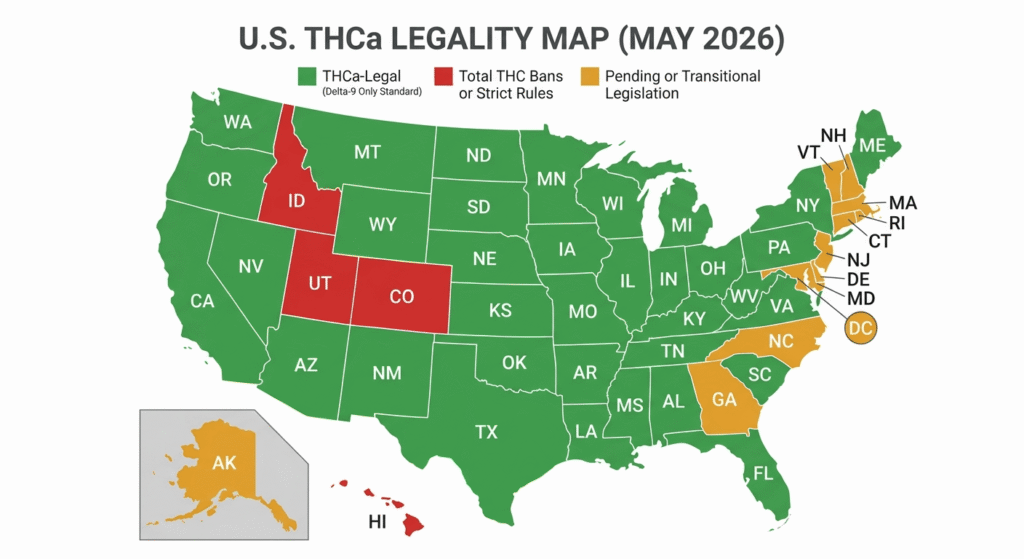
- Certain states Texas, Indiana, Minnesota, Virginia, and California apply stricter “total THC” rules, combining THCa and Delta-9 THC contents.
- Federal agencies such as the DEA and FDA provide overarching guidance, but the specifics of enforcement are largely managed by state agencies.
Upcoming Regulatory Change: On November 12, 2026, Section 781 of the 2026 Agricultural Appropriations Bill redefines compliance by requiring all finished hemp products to contain no more than 0.4 mg “total THC” per package, calculated by combining both THCa and Delta-9 THC. A grace period of 365 days will allow retailers to sell through or adjust their inventory. Staying on top of both federal and state rules is non-negotiable for retailers wanting to avoid penalties, loss of inventory, or even business closures.
THCa Legal States: State-By-State Overview
Laws surrounding farm bill compliant THCa vary substantially across the country. Retailers must recognize the differences between Delta-9 THC-only states, “total THC” states, and those with pending legislation.
| State | Delta-9 THC Only? | Total THC Standard? | THCa Flower Legal? | Pending Changes |
|---|---|---|---|---|
| Alabama | Yes | No | Yes | No changes announced |
| California | No | Yes | No | Aligned w/federal total THC Nov 2026 |
| Colorado | Yes | No | Yes | Total THC post-2026 |
| Florida | Yes | No | Yes | Reviewing re: 2026 bill |
| Indiana | No | Yes | No | Total THC standard active |
| Minnesota | No | Yes | No | Active ban on THCa flower |
| New York | Yes | No | Yes | To be updated 2026 |
| Tennessee | No | Yes | No | Ban effective mid-2026 |
| Texas | No | Yes | No | Total THC standard active |
| Virginia | No | Yes | No | Ban aligned with 2026 |
| Oregon | Yes | No | Yes | Federal preemption pending |
| Wisconsin | Yes | No | Yes | No change yet |
*Always verify both state and local law before shipping or stocking products. For current regulatory information, refer to the USDA Hemp Program or the Congress.gov Farm Bill page.*
THCa Wholesale and Bulk Sourcing for Retailers
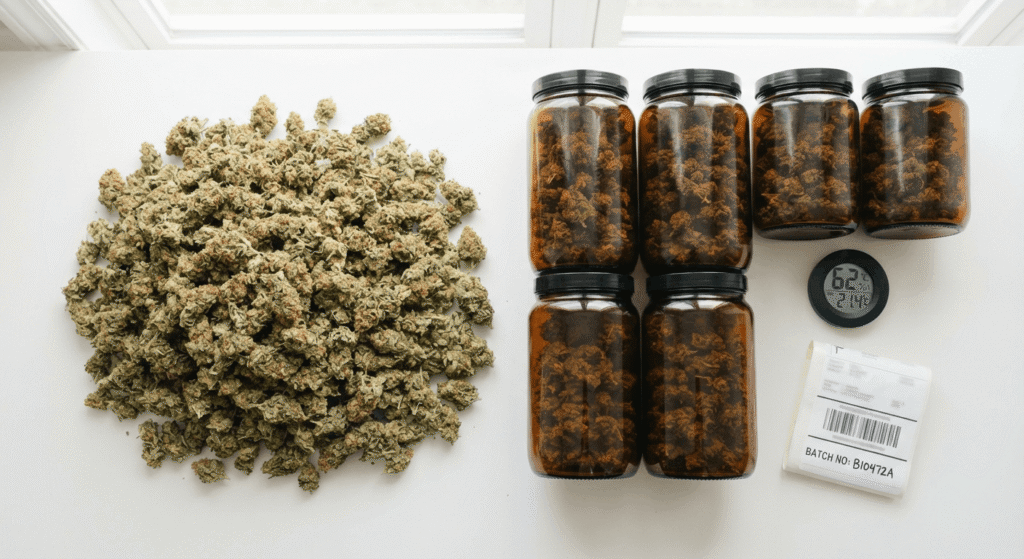
Securing legal and high-quality THCa wholesale products is a competitive process where proper documentation and supplier transparency are non-negotiable. Wholesale partners should make available legally compliant THCa flower and concentrates, always backed by up to date and third-party verified Certificates of Analysis from ISO/DEA-accredited labs. Leading THCa wholesale suppliers are able to document not only cannabinoid levels but also details like batch number, harvest method, lab methodology, and shipping compliance by state.
Retailers should:
- Source hemp flower only from suppliers who meet the 0.3% Delta-9 THC threshold and can validate any claim with a recent COA.
- Confirm that vendors ship only to THCa legal states.
- Ask for transparent documentation of grow method and origin on every batch whether indoor, outdoor, or greenhouse grown.
- Seek established partners who explain state-by-state restrictions and offer compliance support to avoid product seizures or recalls.
- Review lab results for all products sold.
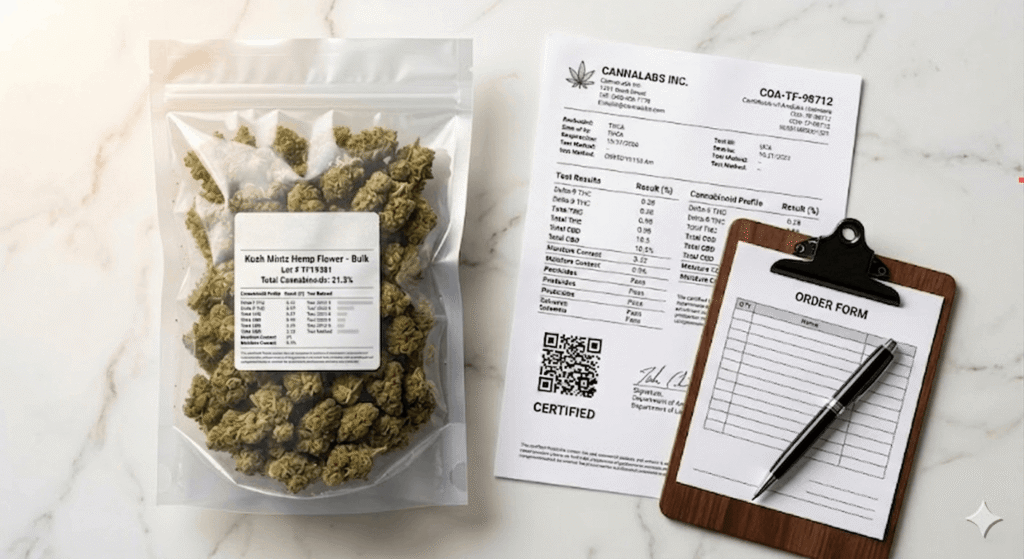
A robust sourcing process mitigates risk and protects your inventory in this volatile regulatory environment.
Bulk THCa: Sourcing at Scale
Retailers often require bulk THCa flower or concentrates to meet demand or support in-store promotions. When evaluating bulk THCa sources, prioritize those that have a reputation for consistent compliance and transparent communications. Purchasing at scale provides an opportunity for price negotiation but also increases potential risks; be sure robust lab documentation accompanies every bulk order.
Choosing High-Quality Product
Selecting legal THCa flower that is both compliant and marketable requires attention to quality, documentation, and customer appeal.
- Cultivation Method: Indoor-cultivated flower often produces better cannabinoid potency, visual appeal, and terpene profiles compared to outdoor crops. Retailers who work with boutique or sustainable growers differentiate themselves and tap into consumer trends.
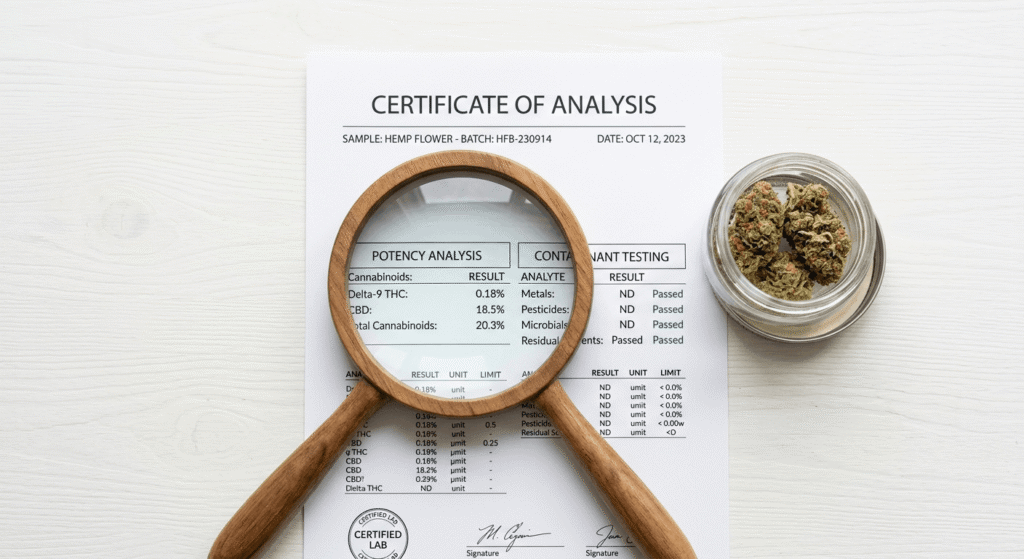
- Potency & Purity: Examine Certificates of Analysis to verify THCa and Delta-9 THC levels, as well as for comprehensive tests on heavy metals, pesticides, and other contaminants. Favor flower that is high in THCa and low in Delta-9 THC, and check for results generated within the past year.
- Transparency: Vendors should provide documented batch numbers, clear labeling, visible COA links, and accurate harvest dates. Products found through the Shop section should display all of these elements.
- Compliance Verification: Ensure packaging claims match lab data and are updated for current (and upcoming) legal environments, especially as the 2026 federal rules transition.
Retailers that focus on the above establish a solid reputation for legal thca flower and promote customer trust. Always request a certificate of analysis before accepting shipments and be wary of anyone unable or unwilling to provide rigorous test documentation.
How to Stay Compliant Guide for Retailers
Retailers must treat compliance as a proactive, ongoing effort. Follow these steps to maintain your operation’s legal standing and navigate the shifting regulatory landscape.
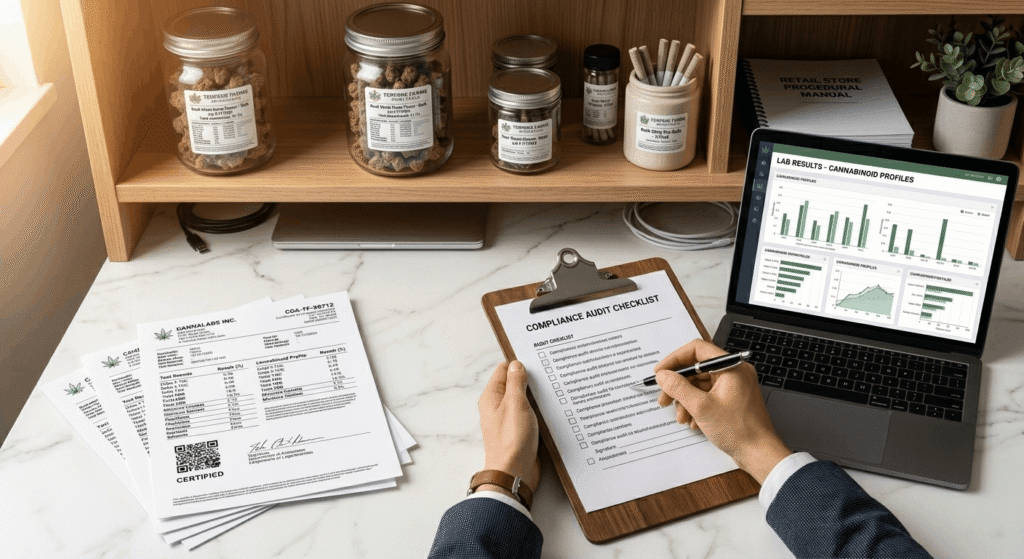
- Verify COA for Every Batch
Every batch must be accompanied by a valid Certificate of Analysis from an ISO or DEA-certified lab. Review the exact percentage of Delta-9 THC and THCa, the test method, and the lab’s credentials. Store all COAs as proof of due diligence in case of any regulatory checks. - Assess Product Labeling and Documentation
Require precise labels on all products, including cannabinoid content, batch number, lab address, COA access link, harvest date, and clear marking for state and federal compliance. Accurate labeling will meet both legal requirements and consumer transparency standards. - Understand State Shipping Restrictions
Only ship products to states that recognize farm bill compliant THCa. Use the USDA Hemp Program to validate state rules. Illegally shipping to a state with total THC standards could result in seized inventory or company fines. - Train Staff and Inform Customers
Regularly update your staff on the latest legal requirements including “total THC” compliance, restricted state lists, and lab result interpretation. Use in-store signage and web-based FAQs to explain the distinctions between THCa and Delta-9 THC. This education builds consumer trust and prevents accidental sales of non-compliant items. - Monitor Regulatory Changes and Plan Ahead
Sign up for ongoing compliance bulletins from the USDA, monitor professional cannabis newsletters, and use resources like Blogs for regulatory updates. Prepare to transition inventory for the November 2026 total THC mandate and avoid last minute surprises.
For those seeking even deeper guidance, refer to our thca guide for best practices and updates.
THCa Product Types: Flower, Vapes, and Concentrates
Retailers can stock a wide range of farm bill compliant thca products, as long as each SKU is validated with a current COA and labeled for legal sale in appropriate states.
- THCa Flower: Raw, high-THCa buds intended for use in their natural state, as pre-rolls, or for sale by the gram or bulk. Products must meet the ≤0.3% Delta-9 THC limit. All options can be browsed in the Flowers section.
- Vape Cartridges: Use THCa distillate or whole-plant extract; require the same federal and state compliance as other SKUs.
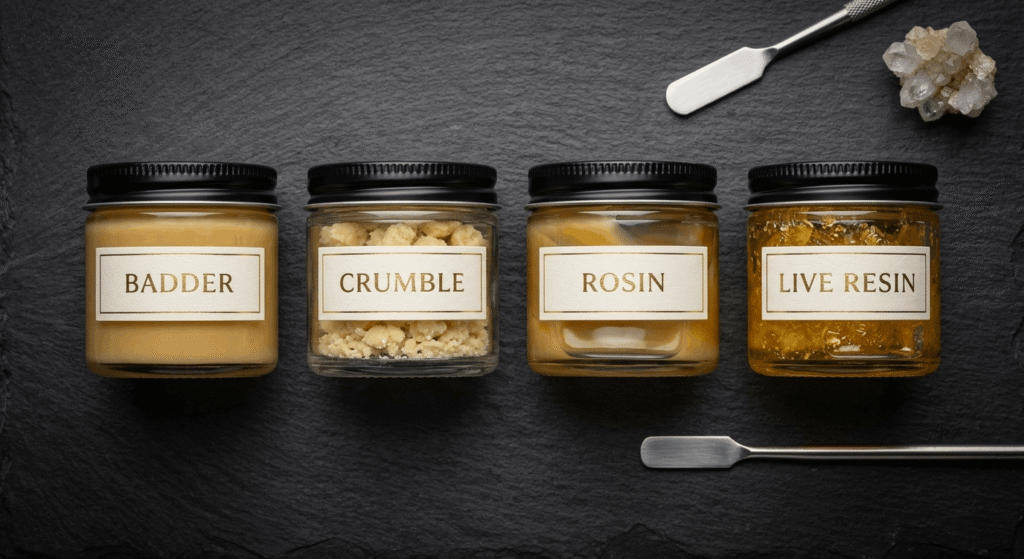
- Concentrates: Retailers may source Badder, Crumble, Distillate, Hash, Live Resin, Rosin, and Sugar. These products are especially sensitive to state “total THC” restrictions and must be shipped and sold only in compliant jurisdictions.
- Novel Products: THCa gummies, tinctures, and other infused goods are subject to strict limits under both FDA and state guidelines. These product types require extra diligence in labeling and documentation, plus advance planning for post-2026 compliance.
Before purchasing, review the latest lab results, and only source from reputable thca flower wholesale distributors who supply comprehensive product information.
Farm Bill Compliant THCa vs. Non-Compliant Products
| Feature | Farm Bill Compliant THCa | Non-Compliant THCa |
|---|---|---|
| Delta-9 THC Content | ≤0.3% by dry weight | >0.3% or not tested |
| THCa Considered (Fed.) | No (until Nov 2026) | Sometimes, if local rule |
| Shipping Allowed | Legal states only | Prohibited/fed or state ban |
| Certificate of Analysis | Required, batch-specific | Often missing or generic |
| Retail Risk | Lower, verifiable | High—risk of seizure/fines |
| Finished Product Cap | ≤0.4 mg total THC by 11/2026 | Typically N/A or violated |
Common Mistakes Retailers Make with THCa Compliance
Retailers can avoid significant risk by being aware of the most common compliance pitfalls:
- Misreading Lab Data: Confusing THCa content with Delta-9 THC levels or neglecting to calculate “total THC” whenever required by law. Effective interpretation of certificate of analysis reports is central to risk management.
- State Law Changes Ignored: Accidentally shipping or marketing farm bill compliant THCa to states that have adopted “total THC” rules or banned all high-THCa hemp products.
- Lax Supplier Screening: Failing to validate every batch with current COAs or accepting bulk thca without full origin documentation.
- Procrastinating Inventory Planning: Not clearing out or reformulating products in time for the November 2026 transition to a “total THC” cap.
Prevent these issues by updating SOPs with the latest guidance, conducting regular staff training sessions, and referencing compliance resources such as Blogs.
Frequently Asked Questions
1. Is THCa legal in all states?
No, the legality of THCa varies widely by region. As of 2026, several states including Texas, Indiana, and Minnesota enforce a “total THC” rule, effectively banning high-THCa hemp products. Others allow legal thca flower if it contains no more than 0.3% Delta-9 THC. Always confirm both federal and local law before stocking or shipping legal THCa flower.
2. What documentation is required for THCa wholesale purchases?
Every THCa wholesale purchase must include a recent, batch-specific Certificate of Analysis that lists cannabinoid content, test date, and laboratory credentials, ideally from ISO/DEA-accredited facilities. The invoice, shipping records, and packaging must all match, and origin documents should prove the product is from a compliant, licensed grower. Use Wholesale Pricing to negotiate volume orders with properly documented suppliers.
3. How does the 2026 total THC standard affect THCa flower?
From November 12, 2026, all Delta-9 THC and THCa will be combined under federal law, and products must contain no more than 0.4 mg total THC per package. This change will prohibit most existing THCa flower products. Retailers have a 365-day grace period to sell through remaining inventory or shift to compliant SKUs.
4. What shipping restrictions exist for legal THCa flower?
Shipping is limited to states that legally permit THCa sales. Major carriers will not handle shipments to states with bans or “total THC” standards. For the most recent rules, consult the USDA Hemp Program or cross-check the “THCa legal states” table. Non-compliance risks package seizure or penalties.
5. How can retailers avoid non-compliant bulk THCa?
Always choose bulk thca suppliers with clear USDA licensing, ISO/DEA-accredited lab results, and a strong record of compliant shipping. Require documentation for every order, conduct regular legal reviews, and audit inventory proactively. If in doubt, connect with compliance pros via the Contact page for expert feedback.
Conclusion
Mastering farm bill compliant THCa is essential for any retailer looking to thrive through 2026 and beyond. By sourcing from reputable thca wholesale partners, securing Certificates of Analysis for each order, and following both federal and state requirements, your business can avoid compliance pitfalls. Proactive attention to changes such as the post-2026 total THC standard ensures you remain ahead in a marketplace that will only become more regulated.