Quick Answer: To vet a THCA wholesale supplier, verify three things before you buy: current third-party lab results tied to a batch-specific Certificate of Analysis, documented Farm Bill compliance, and clear product traceability back to a licensed facility. Reputable USA wholesalers publish COAs and run on a real business entity. Telegram-only, crypto-only sellers are the biggest red flag.
What does it mean to vet a THCA wholesale supplier?
To vet a THCA wholesale supplier means checking that a company can prove its product is legal and lab-tested, and that it traces back to a real facility, before any money changes hands. In practice that means reading lab reports and confirming business records instead of trusting a sales pitch.
The stakes are higher than most new buyers expect. A bad supplier can cost you a seized shipment, a failed retail audit, or flower that tests hotter than its label. Getting this right up front protects your license and your customers.
How do you verify a THCA wholesale supplier’s lab testing and compliance?
Verify a supplier’s lab testing by pulling the batch-specific Certificate of Analysis for the exact product you’re buying, then confirming it came from an independent, accredited lab. Cross-reference the numbers against the supplier’s own published third-party lab results, match each batch to its package, and check the test date so you aren’t reading data from an old harvest.
Third-party lab testing and the Certificate of Analysis
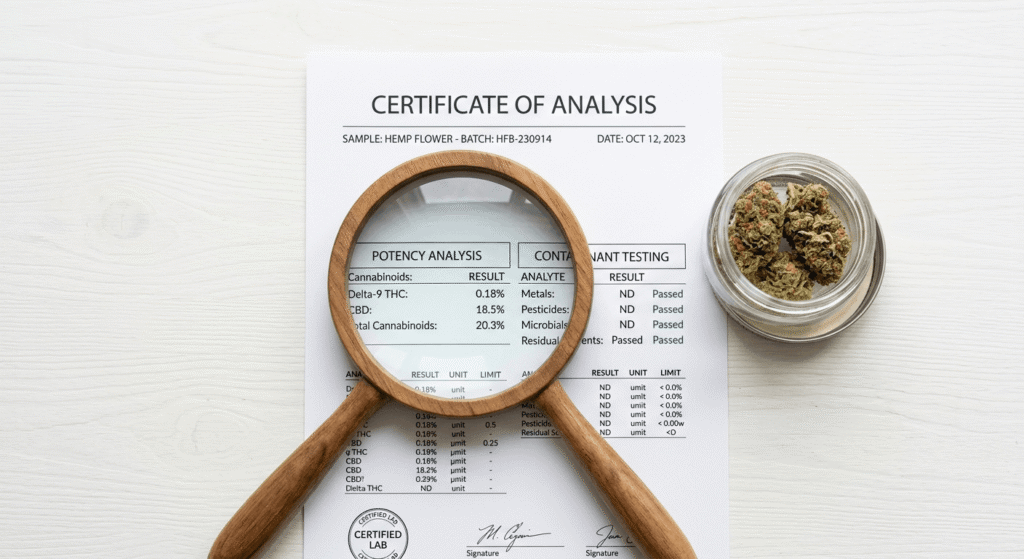
A Certificate of Analysis is the single most important document a THCA wholesaler can hand you. It should come from an independent lab, never the seller’s in-house bench, and list cannabinoid potency alongside screens for pesticides, heavy metals, residual solvents, and microbials. Ask for the batch that matches your order. If one generic COA covers every strain, or the batch numbers never change, treat the report as marketing rather than proof. Labs testing hemp for federal compliance in the USA must be registered with the DEA as of December 31, 2025, and the strongest also hold ISO/IEC 17025 accreditation. You can check how the potency math should work against USDA’s hemp laboratory testing guidelines, which require labs to measure total THC and report a Measurement of Uncertainty.
Farm Bill compliance and THCA legality in the USA
Farm Bill compliance is what separates legal hemp from a controlled substance, and the definition is shifting. Under the 2018 Farm Bill, hemp is Cannabis sativa with no more than 0.3% delta-9 THC by dry weight. That rule is being rewritten. Section 781 of P.L. 119-37, signed in November 2025, redefines hemp using a total THC standard that counts THCA, and it takes effect November 12, 2026. Ask a supplier how they’re preparing. A serious wholesaler already reports total THC on its COAs, not delta-9 alone. The congressional analysis of the hemp definition change is the clearest primary source on THCA legality right now, and our guide to Farm Bill compliant THCa rules for 2026 explains what it means for retail hemp products.
Product traceability from a licensed, ISO-certified facility
Product traceability answers one question: can the supplier show where this flower was grown, when it was harvested, and which lot it came from? Ask for a business license, a physical address, and lot numbers that tie back to cultivation and testing records. The federal Domestic Hemp Production Program, codified at 7 CFR Part 990, requires licensed producers to keep sampling and disposal records, so a compliant grower has a paper trail. An ISO-certified facility raises the bar. ISO/IEC 17025 covers the testing lab, while GMP-style controls on the processing side signal repeatable quality. No license, no address, no records: that silence is your answer.
[Image: annotated screenshot of a batch-specific Certificate of Analysis with the potency and contaminant panels circled] Alt: “THCA wholesale supplier Certificate of Analysis lab report example”
What are the red flags of a THCA wholesale scam?
The clearest red flags of a THCA wholesale scam are pressure to pay only through crypto, Zelle, or a wire transfer, communication that lives entirely inside Telegram or Signal, and prices that undercut the real market by half. Add a missing business entity and no verifiable COAs, and you’re almost certainly dealing with a dropshipper or outright fraud.
THCA wholesale payment scams and Telegram dropshippers
THCA wholesale payment scams tend to follow one script. A polished Telegram account offers pounds at prices no licensed farm could match, insists on irreversible payment, then ships nothing or sends untested filler. Telegram dropshippers rarely hold inventory. They forward your order to a third party, so you have no recourse when a package is seized or the quality is wrong. Watch for these signals:
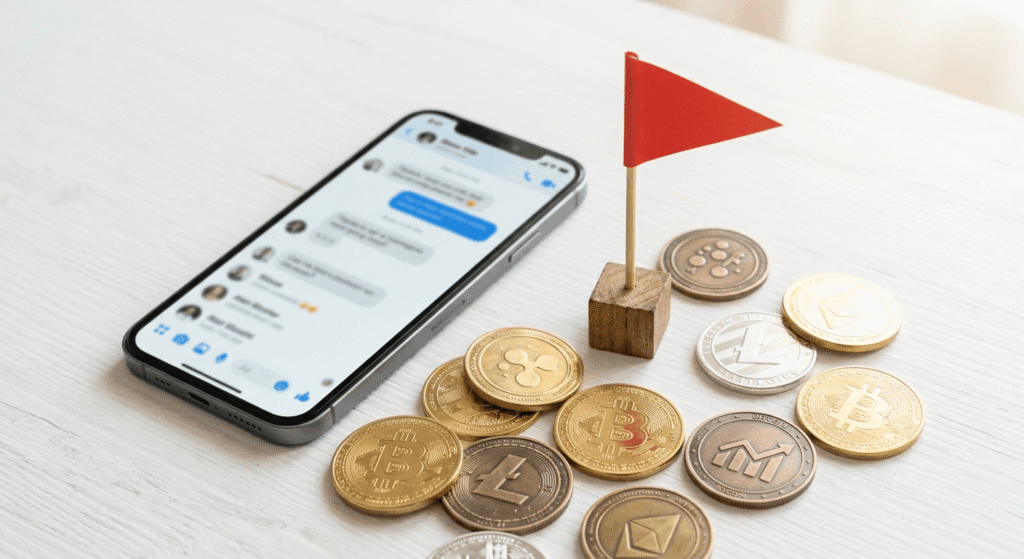
- Payment accepted only by crypto, wire transfer, Zelle, or gift cards, with no invoice
- No registered business name, EIN, or verifiable physical address
- Sales and support that happen only inside a messaging app, never on a company domain
- Batch COAs that are missing, blurry, unsigned, or identical across every product
- Prices far below the wholesale market, paired with pressure to lock in today
A legitimate wholesaler sends a real invoice, accepts traceable business payment, and puts its terms in writing.
Vendor verification for retail hemp products
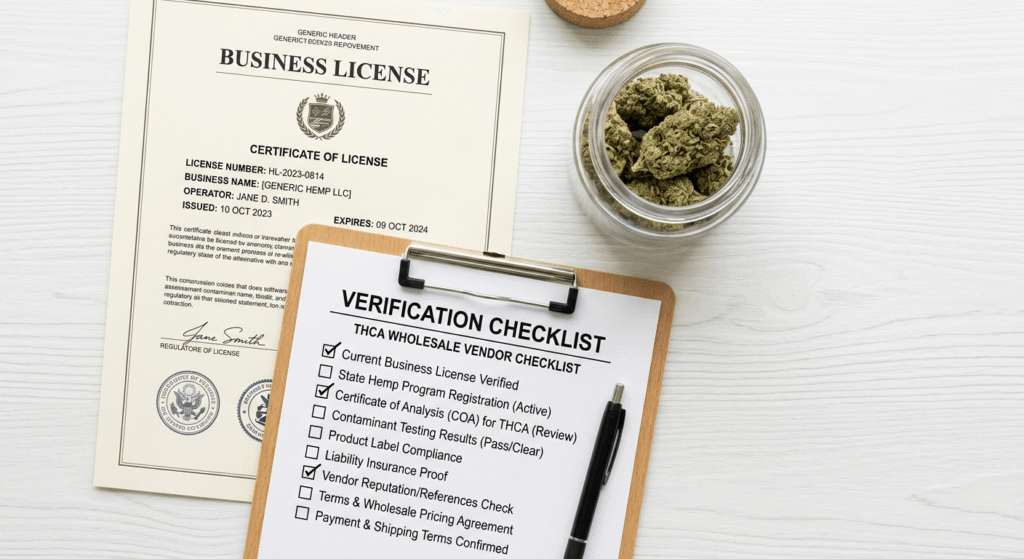
Vendor verification is the last gate before you trust a THCA wholesale supplier with a standing order. Confirm the business is registered in its state, ask for references from other retail buyers, and place a small test order before you commit to volume. Check that the supplier’s name, address, and phone match across every listing, the NAP consistency you’d expect from any real company. For retail hemp products headed to a shelf, request proof of general and product liability coverage. If you want a sense of what separates a reputable wholesale source from a reseller, the gap almost always shows up in documentation and how fast they answer hard questions.
Frequently Asked Questions
1. How can I tell if a THCA wholesale supplier’s Certificate of Analysis is real?
Match the COA’s batch number to the physical product, confirm the test date is recent, and check that the lab is independent and DEA-registered. A real report lists potency plus pesticide, heavy metal, solvent, and microbial screens. One generic COA reused across every strain is a warning sign.
2. Is THCA flower still Farm Bill compliant in 2026?
As of mid-2026, hemp-derived THCA flower under 0.3% delta-9 THC by dry weight is still federally legal under the 2018 Farm Bill. That changes on November 12, 2026, when Section 781 of P.L. 119-37 shifts the standard to total THC. State laws vary, so confirm local rules before buying.
3. What payment methods signal a THCA wholesale scam?
Be cautious when a supplier accepts only these methods with no invoice or business paper trail:
- Cryptocurrency sent to a personal wallet
- Zelle, Cash App, or Venmo to an individual
- Wire transfer with no signed agreement
- Prepaid gift cards
Traceable, reversible business payment options are the safer sign.
4. How do I verify a THCA testing lab is legitimate?
Confirm the lab is independent from the seller, registered with the DEA to test hemp, and ideally accredited to ISO/IEC 17025. Cross-check its name with the state or tribal hemp program that oversees it. A real lab issues a signed, batch-specific report you can trace, not a screenshot.
5. Can I legally ship THCA flower across state lines in the USA?
Federally, hemp-derived THCA under 0.3% delta-9 THC by dry weight can move in interstate commerce as of mid-2026. But several states, such as Idaho, restrict or ban THCA flower, and the list keeps changing. Confirm the destination state’s rules and ask how your supplier handles compliant shipping.
Conclusion
Knowing how to vet a THCA wholesale supplier comes down to documents you can verify: current third-party lab results, a clear Farm Bill position, real traceability, and a business that operates in the open. The Telegram-only, crypto-only sellers aren’t going anywhere, and they’ll always look cheaper on paper. A seized shipment or a failed audit costs far more than the few dollars you saved. Start small, read the COAs closely, and weigh any quote against transparent wholesale pricing before you scale. With the total-THC rule landing on November 12, 2026, buying from a supplier that already tests and documents to that standard is the smartest move you can make this year.