Quick Answer Box: THCA wholesale refers to bulk purchases of hemp-derived THCA flower at the pound level or higher, priced between $400 and $2,200 per pound in 2026 depending on cultivation method. Buyers should expect MOQs starting at 1 pound, require batch-specific COAs from ISO/IEC 17025-accredited labs, and plan for a significant federal compliance shift taking effect November 12, 2026.
TL;DR
- Wholesale THCA flower pound pricing in 2026 runs $400 (outdoor) to $2,200 (premium indoor), with cultivation method as the main driver.
- Most thca wholesalers set a 1-pound MOQ for bulk flower; volume discounts open at 5-10+ lbs.
- On November 12, 2026, the Continuing Appropriations and Extensions Act shifts federal hemp compliance from a delta-9-only standard to a total-THC cap of 0.4 mg per container.
- Every bulk order must come with a batch-specific COA from an ISO/IEC 17025-accredited lab covering potency, pesticides, heavy metals, and microbials.
What to Look For in a THCA Wholesale Supplier
THCA wholesale means buying hemp-derived tetrahydrocannabinolic acid flower in bulk, typically at the pound level, from cultivators, processors, or distributors. Under the 2018 Farm Bill, it’s federally legal as long as flower tests below 0.3% delta-9 THC on a dry-weight basis. In 2026, evaluating thca wholesale distributor options comes down to four variables: pricing transparency, documentation quality, order consistency, and shipping logistics.
How Much Does THCA Flower Cost at Wholesale in 2026?
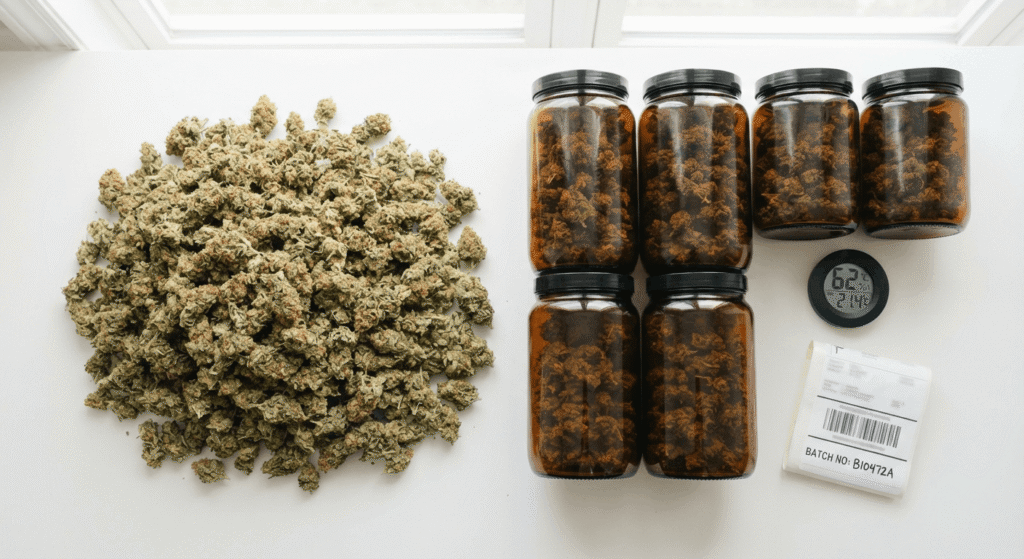
Wholesale pound pricing in 2026 ranges from roughly $400 for outdoor sun-grown product up to $2,200 for premium indoor with exotic genetics. Cultivation method drives that spread more than any other factor, but trim grade and order volume can move the number significantly in either direction.
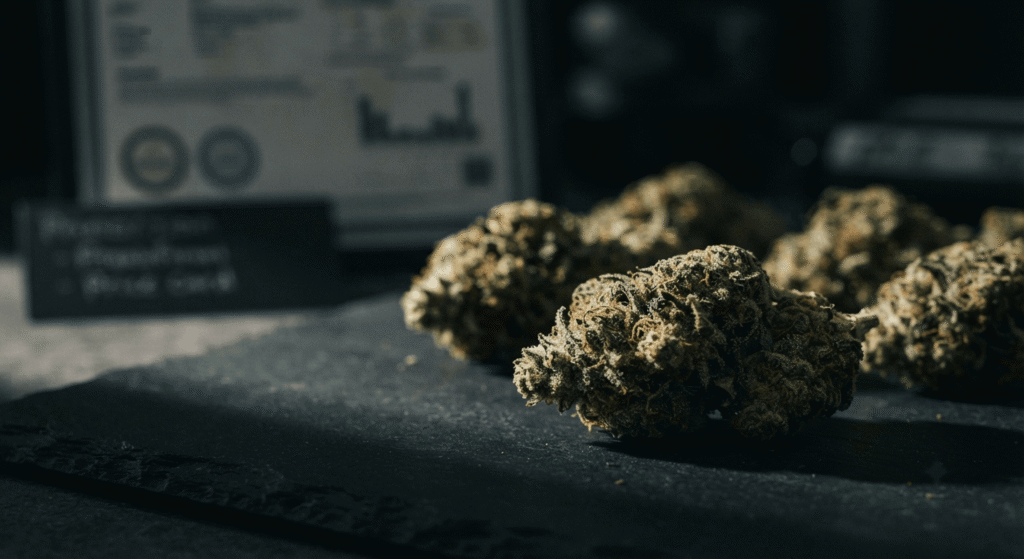
Outdoor flower costs far less to produce. That lower overhead translates directly into pound pricing, and it’s a smart purchase for pre-roll manufacturers or extraction operations where bud structure matters less than raw cannabinoid yield. Indoor commands a premium because climate-controlled environments produce denser trichome coverage, consistent cure quality, and the bag appeal that moves units off retail shelves. Greenhouse product lands in between, and for mid-tier retail it’s often the right call.
Smalls from the same indoor harvest frequently test at identical THCA percentages as full-sized buds but come in 20-40% cheaper per pound. That makes them one of the more underrated thca deals in the bulk flower market. See why smalls deserve more attention than most buyers give them.
Exotic or limited genetics like Jealousy and Ice Caps carry $900-$1,200 per pound even from greenhouse operations. You’re paying for scarcity and strain recognition, not just grow environment.
| Cultivation Tier | Pound Pricing (2026) | THCA % Range | Best Use Case | Trim Grade |
|---|---|---|---|---|
| Premium Indoor | $1,400–$2,200 | 25–35% | Top-shelf retail, dispensaries | Hand-trimmed |
| Mid-Grade Indoor | $900–$1,400 | 20–25% | Mid-tier retailers | Machine-trimmed |
| Greenhouse | $600–$900 | 18–24% | Value retail, pre-rolls | Varies |
| Outdoor | $400–$600 | 15–22% | Pre-roll production, extraction | Varies |
| Smalls / Trim | $200–$500 | 15–30% | Budget retail, pre-roll brands | N/A |
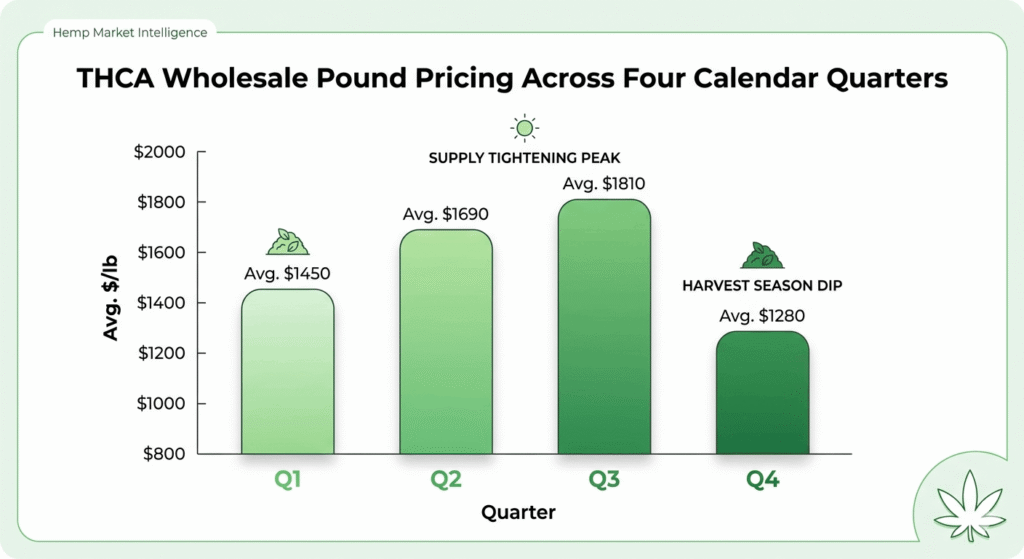
Timing your wholesale deals around harvest season, October through January, gets you the best pound pricing of the year. Q4 supply peaks and pricing drops. Q2 and Q3 run tighter, especially for premium indoor that sells through fast. Check current bulk pricing at thcawholesale.deals.
What MOQs Do THCA Wholesale Distributors Typically Require?
Most THCA wholesale distributors in 2026 set a minimum order quantity of 1 pound for bulk flower. That’s the standard entry point, and it applies across most operations. Volume discounts usually step up at 5, 10, and 25+ pound thresholds. The savings become real at 10 lbs and meaningful at 25+.
Larger operations serving regional distributors or multi-location retailers sometimes require 50-100 pound minimums. For a smoke shop or independent retailer, starting there doesn’t make sense. A 1-5 lb pilot order lets you evaluate trim quality, cure, potency consistency, and the supplier’s wholesale fulfillment process before committing to larger numbers.
For THCA isolate, MOQs run differently. Most reputable suppliers start at 100 grams to 1 kilogram for first-time buyers. Established accounts with a transaction history can negotiate 5-25 kg recurring contracts with locked-in pricing. A supplier with no MOQ at all is worth scrutinizing; it often signals they’re brokering inventory rather than holding it.
Payment terms reflect relationship stage. New buyers typically pay upfront. Net 15 and Net 30 terms open up after 3-5 successful orders. Most distributors accept bank wire, ACH transfer, and cryptocurrency for B2B transactions. Credit terms on a first order are rare and should prompt a question about why they’re being offered.
How Is the November 2026 Deadline Reshaping THCA Wholesale Compliance?
This is the most consequential shift in the THCA wholesale market right now. Most buyers aren’t tracking it closely enough.
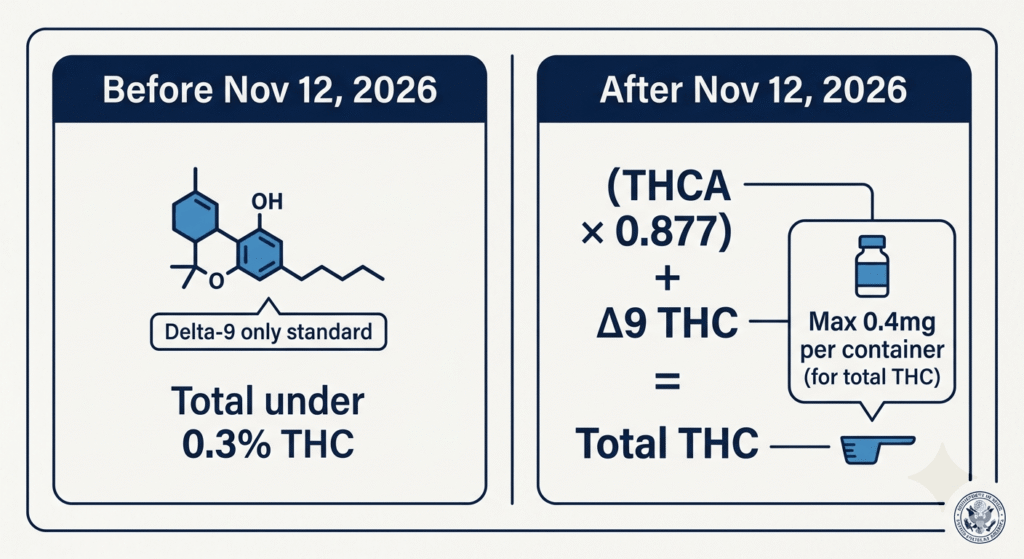
On November 12, 2025, the Continuing Appropriations and Extensions Act was signed into law. Section 781 materially amended the federal definition of hemp, replacing the delta-9-only compliance threshold with a total-THC standard. Starting November 12, 2026, finished hemp-derived cannabinoid products must contain no more than 0.4 milligrams of total THC per container. Legal analysts at Womble Bond Dickinson have noted that businesses cannot wait until the federal effective date to adapt, as the redefinition is already reshaping supply chains and testing requirements.
The formula every THCA wholesale buyer needs to know now: total THC equals (THCA × 0.877) plus delta-9 THC, calculated on a dry-weight basis. At that math, high-THCA flower that passes today’s delta-9-only standard won’t automatically meet the incoming rule.
Cannabis Business Times reported that the House-passed 2026 Farm Bill would further redefine hemp as cannabis testing below 0.3% total THC, closing the delta-9 loophole that allowed high-THCA products to circulate federally. The U.S. Hemp Roundtable estimates the amended definition could eliminate roughly 95% of existing hemp-derived cannabinoid products.
Ask every supplier how they’re addressing November 2026. Get that answer in writing. The Farm Bill compliance guide for THCA retailers covers what this means for your inventory now.
What Does a Compliant THCA Wholesale COA Need to Show?
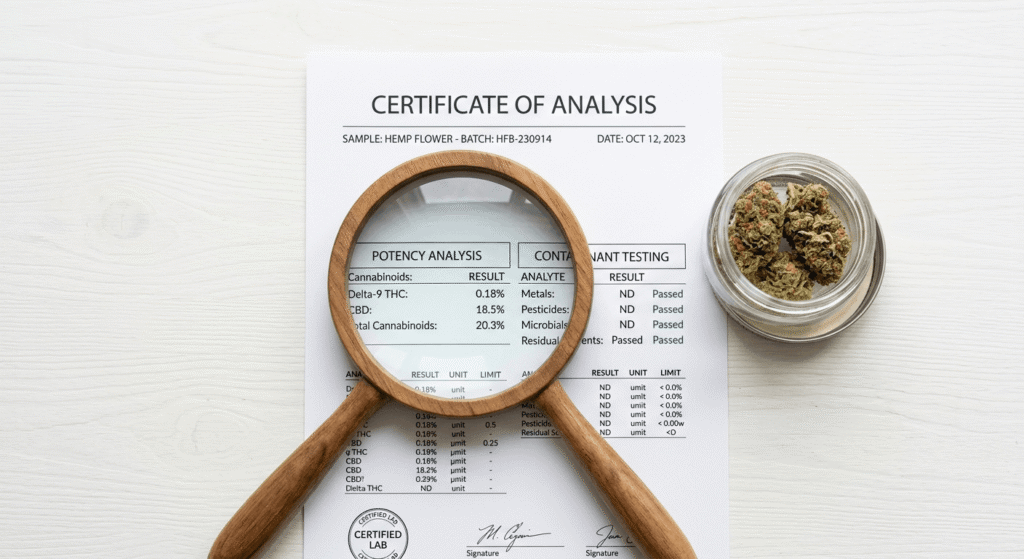
A Certificate of Analysis for any THCA flower wholesale order must come from an ISO/IEC 17025-accredited laboratory. The COA must be batch-specific, matched to the exact lot you’re buying, not a representative sample from a prior harvest. Results older than 6 months should trigger a request for updated testing; THCA slowly converts to delta-9 THC as product ages, and an outdated panel tells you nothing accurate about current inventory.
The minimum required panels: full cannabinoid profile (THCA, delta-9 THC, CBD, CBN, CBG), terpene analysis, pesticide screening, heavy metals, microbials including E. coli and Salmonella, and moisture content. Properly cured flower should hit 8-12% moisture. Outside that range, you’re accepting either dried-out, terpene-depleted product or flower with mold risk in transit.
Well-known accredited labs include ACS Laboratory, ProVerde Laboratories, Anresco Laboratories, and Confident Cannabis. Accreditation matters more than brand recognition. Any lab your supplier uses should be able to provide its ISO/IEC 17025 documentation on request. Browse the lab results page at thcawholesale.deals to see what compliant COA documentation looks like in practice.
Suppliers who hesitate to share batch-specific COAs before an order is placed have already told you everything you need to know.
Red Flags to Watch For When Choosing THCA Wholesalers
Pricing below the floor is the first warning sign. Outdoor THCA flower under $300 per pound almost always means incomplete testing, CBD flower relabeled as THCA, or significant quality defects. The cost to grow, cure, test, and ship legal compliant product has a real floor, and pricing far below it means someone cut a corner somewhere.
Generic or unmatched COAs are the second red flag. If the Certificate of Analysis doesn’t share a batch number with the product you’re buying, it proves nothing. Always ask for the lot number from the COA to match the lot number on the packaging before payment.
Brokers who have never physically held the inventory are a third concern. Real distributors know the moisture content, the harvest date, and whether the current batch is fresh or aging. A vague answer to “when was this harvested?” is a problem. Reputable thca wholesalers can answer that question immediately.
Any supplier who won’t provide a sample ounce before a multi-pound commitment deserves a hard pass. It’s a standard practice for operations that are confident in what they’re selling.
Which THCA Wholesale Tier Is Right for Your Business?
Smoke shops and convenience retailers focused on high-volume, single-gram units should lean toward mid-grade indoor or greenhouse pounds. The margin works at those price points, and the product moves.
If you’re looking for THCA near you to stock a dispensary-adjacent retail location where customers compare percentages and judge by visual appeal, premium indoor is worth the extra cost per pound. The product sells faster and at higher margins.
Pre-roll brands and extraction operations should buy outdoor or smalls. The per-gram cost is the lowest available, and trim grade doesn’t affect the finished product. For white-label builds or private brands, start with greenhouse or smalls, run a sample to an independent lab, and lock down an exclusive strain relationship with your supplier. That’s where margin and brand differentiation intersect.
Frequently Asked Questions
1. How much does THCA flower cost per pound at wholesale in 2026?
Pound pricing for THCA flower wholesale in 2026 runs from about $400 for outdoor product to $2,200 for premium indoor with high-demand genetics. Greenhouse pounds typically land between $600 and $900. Smalls and trim from the same harvest usually come in 20-40% cheaper than full-sized indoor buds while testing at similar THCA percentages.
2. What is the minimum order quantity for THCA wholesale purchases?
Most thca wholesale distributor operations set a 1-pound MOQ for bulk flower in 2026. Volume discounts become significant at 5-10+ pounds. For isolate, first-time MOQs start at 100 grams to 1 kilogram. Larger distributors focused on regional accounts sometimes require 50-100 pound minimums and work only with established buyers.
3. Is THCA flower still legal to ship across state lines in 2026?
Under the current 2018 Farm Bill framework, hemp-derived THCA flower testing below 0.3% delta-9 THC can be shipped interstate in states where hemp products are permitted. That standard changes on November 12, 2026 when the total-THC rule takes effect. States including Idaho, South Dakota, and Nebraska already maintain restrictive policies that complicate shipments regardless of federal status.
4. What should I ask a THCA wholesale supplier before placing a first order?
Ask for batch-specific COAs from an ISO/IEC 17025 lab, the harvest date of current inventory, their fulfillment timeline, whether they offer a sample before a full pound commitment, and how their product addresses the November 2026 total-THC compliance shift. A supplier who can’t answer those questions clearly is not ready for a serious B2B relationship.
5. How long does wholesale fulfillment typically take for bulk THCA orders?
Most established operations ship within 1-3 business days of payment processing. Domestic transit adds 2-5 business days depending on carrier and destination. Several distributors offer UPS overnight or expedited options for time-sensitive restocks. Always confirm lead time in writing before placing a large order.
6. What does the total THC formula mean for THCA wholesale buyers?
Total THC is calculated as (THCA multiplied by 0.877) plus delta-9 THC, measured on a dry-weight basis. This formula matters because the November 2026 federal deadline under the Continuing Appropriations and Extensions Act applies a total-THC standard to finished hemp-derived products rather than the old delta-9-only threshold. Buyers should run this calculation on every incoming COA to assess how inventory will hold up under the new rule.
Conclusion
The THCA wholesale market in 2026 offers real value across every pricing tier, from outdoor pounds in the $400 range to premium indoor above $2,000, but the compliance landscape is the sharpest it has ever been. The November 2026 federal deadline is not a distant concern. It’s a supply chain issue that affects purchasing decisions right now. Smart thca wholesale buyers are auditing their COAs, learning the total-THC formula, and choosing distributors who can answer compliance questions directly and on the record. That combination of value and documentation discipline is what separates durable wholesale relationships from costly short-term mistakes.