Quick Answer Box: THCA legality depends on both federal and state laws. Under the 2018 Farm Bill, federally compliant THCA can be shipped to many states, but some ban it due to state-level restrictions or “total THC” rules. Always check your state’s laws before buying or shipping THCA flower to ensure compliance.
What is THCA?
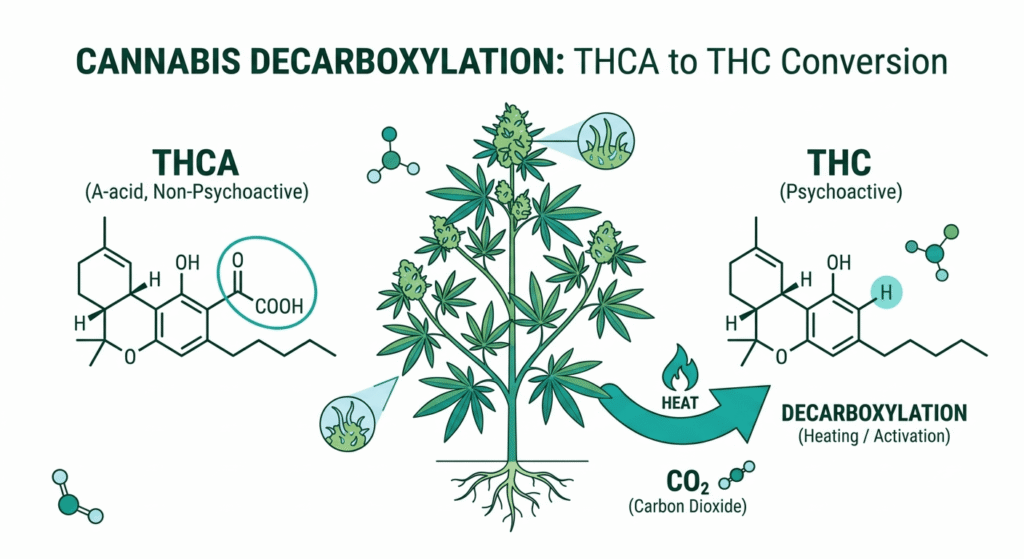
THCA, or tetrahydrocannabinolic acid, is a cannabinoid produced naturally in cannabis and hemp plants. It acts as the chemical precursor to delta-9 THC but does not cause intoxication unless exposed to heat. When heated, THCA converts to THC and delivers psychoactive effects. Because of these distinct chemical and practical properties, THCA is treated differently by both scientists and lawmakers compared to THC itself.
THCA Legality Overview: Federal vs. State Laws
THCA legality in the United States results from a mix of federal and state laws. At the federal level, the 2018 Farm Bill (the Agriculture Improvement Act of 2018) legalized hemp and its derivatives, including hemp-derived THCA, if products remain under 0.3% delta-9 THC by dry weight. As long as THCA products comply with this threshold, they are permitted federally. The USDA’s Farm Bill guidelines oversee federal compliance. However, the Drug Enforcement Administration (DEA) considers the “total THC” standard in enforcement cases—meaning the combination of delta-9 THC plus the THC that could be produced from decarboxylation of THCA.
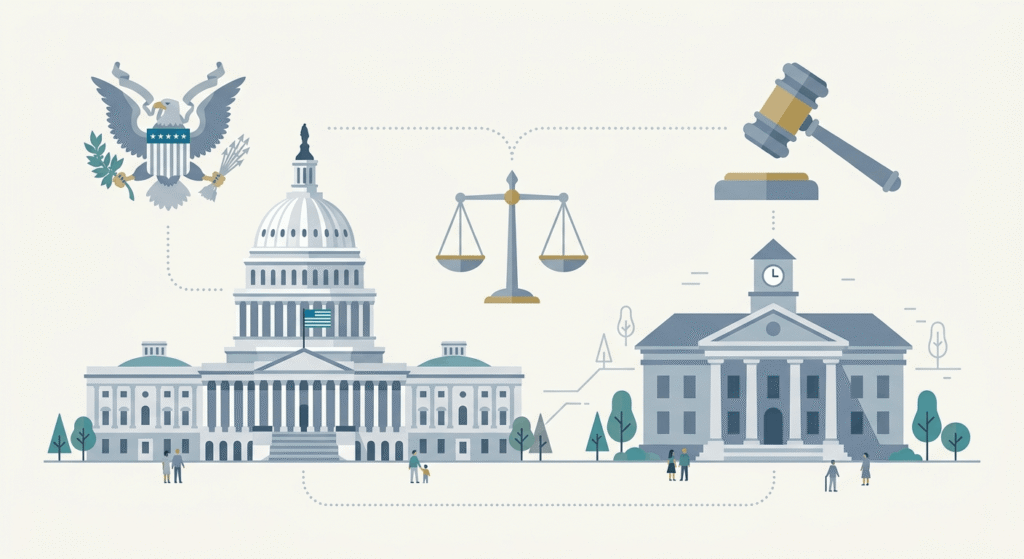
States may adopt more restrictive THCA laws than the federal government. Many implement stricter “total THC” calculations, ban certain product types, or require special licensing. This means thca legality depends heavily on the state in which you live or operate. For example, some states allow THCA flower if it meets the federal standard; others count THCA toward their THC limit, making most “legal” THCA products unlawful there. Knowing both federal and state thca regulations is key when considering purchasing, selling, or shipping thca flower.
THCA Legal States: Definition and Changing Laws
The term “THCA legal states” refers to U.S. states where thca flower and related products are permitted for sale and shipment, provided they comply with the 2018 Farm Bill and any additional state laws. While the federal Farm Bill set a standard, states can establish their own interpretations and enforcement priorities. Therefore, is thca legal often depends on local legislation and the latest guidance from state-level agriculture departments.
Defining “Total THC” in State Laws
Some states use a “delta-9 THC only” calculation for legal compliance, focusing solely on the measured delta-9 content, while others add the theoretically possible THC generated from THCA conversion. These “total THC” laws mean that many high-THCA hemp products, technically compliant under federal law, may still be restricted or banned locally.
How is THCA Regulated in the United States?
THCA regulations in the U.S. stem from interactions between federal frameworks and evolving state rules. Every state must implement the Farm Bill’s requirement that hemp-derived products not exceed 0.3% delta-9 THC, but individual states set stricter conditions or additional requirements as thca laws.
Delta-9 THC Only vs. Total THC Testing
In approximately 60% of states, testing focuses only on delta-9 THC content. In these areas, THCA products that remain under the 0.3% delta-9 THC limit are considered legal under both state and federal law. By contrast, a growing group of states applies a “total THC” standard. This calculation sums both delta-9 THC and the maximum potential THC if all THCA converts after heating. For example, Georgia uses its 2024 SB 494 law to place THCA on equal legal footing with delta-9 THC.
State-Specific Restrictions
Some states have banned smokable hemp or high-THCA flower entirely—regardless of delta-9 THC content and federal rules. In other locations, thca flower is legal but restricted to use by registered medical marijuana patients or within state-licensed programs. These differences make compliance more challenging and increase the need to verify local thca legality before purchase or shipment.
Examining State Enforcement and Updates
State laws are not static. Many legislatures reconsider thca legality and enforcement practices annually, so even “THCA legal states” may shift policies with new sessions or public health advisories. Always consult recent legal updates or authoritative sources for your state, such as official government portals, to ensure your information is current.
THCA Legal States: State-by-State Law
THCA legality is dynamic and often changes within a year. Use this up-to-date comparison table for an overview, but always confirm using your state’s official resources. Lawful hemp flower vendors will provide documentation, third-party testing, and clear guidance for your location.
| State | THCA Flower Legal? | “Total THC” Rule Used? | Shipping Permitted? | Notable Details |
|---|---|---|---|---|
| Alabama | Restricted | Yes | No | No THCA/hemp flower allowed |
| Alaska | Legal | No | Yes | Follows federal standards |
| Arizona | Transitioning | Pending | Changing | Compliance rules in flux (2026) |
| Arkansas | Restricted | Yes | No | Smokable hemp and THCA flower banned |
| California | Legal | No | Yes | Active market for THCA flower |
| Colorado | Restricted | Yes | No | Applies total THC standard, restricts flower sales |
| Florida | Legal | No | Yes | Allowable if delta-9 THC <0.3% |
| Georgia | Restricted | Yes (SB 494, 2024) | No | THCA legal only within licensed programs |
| Hawaii | Restricted | Yes | No | Bans smokable hemp products |
| Idaho | Banned | N/A | No | Zero-THC rule—no THCA or THC allowed |
| Illinois | Legal | No | Yes | Permissive, follow federal rules |
| Indiana | Legal | No | Yes | No state restriction beyond federal law |
| Iowa | Restricted | Yes | No | Total THC enforced, restricts THCA flower |
| Kansas | Restricted | Yes | No | Outlaws smokable hemp due to total THC |
| Kentucky | Legal | No | Yes | No additional restrictions |
| Louisiana | Legal | No | Yes | Generally allows THCA flower |
| Maine | Legal | No | Yes | State follows federal standard |
| Maryland | Legal | No | Yes | Allows compliant shipping |
| Massachusetts | Legal | No | Yes | Permissive state for hemp flower |
| Michigan | Legal | No | Yes | Bi-modal market—hemp and regulated cannabis |
| Minnesota | Limited | Yes | Yes (restrictions) | Potency, serving size rules limit retail sales |
| Mississippi | Restricted | Yes | No | Restriction on smokable hemp and THCA |
| Missouri | Restricted | Yes | No | THCA only via MMJ program |
| Montana | Legal | No | Yes | Follows federal law |
| Nebraska | Limited | Yes | Unclear | State-by-state changes ongoing |
| Nevada | Legal | No | Yes | Shipping allowed |
| New Hampshire | Legal | No | Yes | No state restriction, follows federal |
| New Jersey | Legal | No | Yes | Allows THCA flower with 0.3% delta-9 THC |
| New Mexico | Legal | No | Yes | Permits THCA sales if compliant |
| New York | Limited | Pending | Changing | Regulatory transition to total THC |
| North Carolina | Legal | No | Yes | Permissive for THCA flower |
| North Dakota | Legal | No | Yes | Follows federal threshold |
| Ohio | Legal | No | Yes | State follows federal law |
| Oklahoma | Legal | No | Yes | No extra restrictions |
| Oregon | Restricted | Yes | No | Bans smokable hemp flower |
| Pennsylvania | Legal | No | Yes | Shipping allowed |
| Rhode Island | Legal | No | Yes | No state-level restrictions |
| South Carolina | Legal | No | Yes | Shipping allowed |
| South Dakota | Legal | No | Yes | Permissive, follows federal law |
| Tennessee | Legal | No | Yes | THCA flower allowed |
| Texas | Restricted | Yes (2026) | No | Recent adoption of total THC rule |
| Utah | Restricted | Yes | No | Bans smokable hemp and THCA flower |
| Vermont | Restricted | Yes | No | “Gray zone”—regulator conflict, best avoided |
| Virginia | Legal | No | Yes | Shipping allowed |
| Washington | Legal | No | Yes | Allows THCA flower |
| West Virginia | Legal | No | Yes | No state restrictions |
| Wisconsin | Legal | No | Yes | Shipping allowed |
| Wyoming | Legal | No | Yes | Follows federal hemp law |
| D.C. | Restricted | Yes | No | Cannabis products limited to local programs |
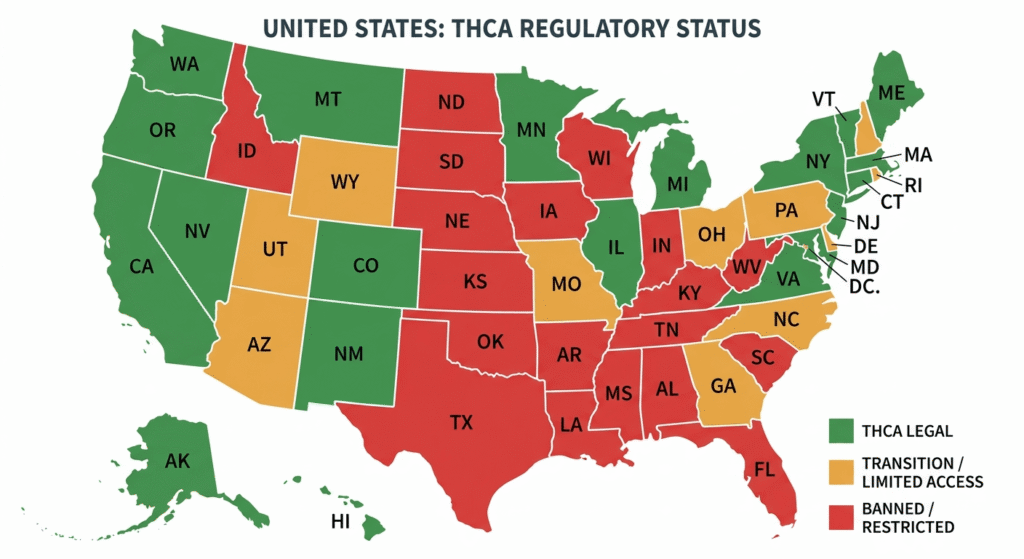
Note: Laws update often. For the latest, see your state’s statutes and consult the official farm bill resource.
Is THCA Legal? How to Check State Laws
To accurately check THCA legality and avoid legal risk, follow these steps before buying or shipping thca flower:
- Identify State-Specific Hemp and Cannabis Statutes
Input your state name and keywords like “hemp law,” “cannabis statute,” or “controlled substances” on state legislature or Department of Agriculture websites. Refer to established resources to verify the most recent thca laws. - Look for Delta-9 THC and Total THC Language
In your state’s regulations, see if they mention only “delta-9 THC not exceeding 0.3% by dry weight” (aligned with federal law), or use “total THC” which includes potential THC from THCA conversion. This language determines if thca flower is lawful. - Check for Bans on Smokable Hemp or THCA Flower
Even if the THC content is compliant, some states prohibit smokable hemp or specifically restrict thca flower. Look for rules with wording like “smokable”, “combustible”, or “inhalable” hemp product bans. - Review State Hemp Program Announcements and Department Releases
Browse your state government portal for the latest news around thca regulations or hemp product enforcement. Updates about new legislation or bulletins, such as Georgia’s 2024 SB 494, may affect shipping and possession rules. - Monitor Legal News, Blogs, and Industry Alerts
Since thca legality is evolving, check reputable blogs and industry publications for recent enforcement actions or legal changes in the last 12 months. - Ask an Official Agency or Legal Professional if Uncertain
When rules are unclear, use state agency contact pages or hire a qualified cannabis attorney for clarity on local thca laws.
By following these steps, you can answer “is thca legal” in your state and make informed decisions about compliance and purchasing.
THCA Flower and Hemp Flower: What’s the Difference?
Both thca flower and more traditional hemp flower are sourced from legally grown hemp, but they differ in composition, effect, and legal treatment. Hemp flower is typically cultivated for low THC and high CBD or CBG content, making it popular for wellness and non-intoxicating use. In contrast, thca flower is bred and harvested to accentuate THCA, which stays non-intoxicating until decarboxylated through heat.
Effects and Uses
- THCA flower: Produced to yield high THCA and low delta-9 THC, thca flower provides the raw benefits of the cannabinoid before exposure to heat. Once smoked or vaporized, the THCA converts to THC, producing psychoactive effects similar to marijuana. Many users in THCA legal states opt for this form as a legal THC alternative where compliant.
- Other hemp flower: Usually selected for CBD (calming, non-intoxicating effects) or CBG (which may offer unique wellness properties), hemp flower is often used for relaxation, industrial applications, or extraction.
Regulatory Significance
Because thca flower can create intoxicating effects when heated, some states regard it as equivalent to marijuana for legal purposes, even if the flower started as a hemp product. For legal protection, always review the COA and understand your specific state’s approach under thca laws before buying. For a range of hemp flower options and certified THCA products, explore our flowers and concentrates categories, each featuring up-to-date batch reports.
THCA Flower vs. Hemp Flower Legality
Many consumers are drawn to thca flower, assuming its federal legality ensures state-level compliance. However, because state laws vary significantly, it’s essential to confirm whether THCA flower is allowed or treated as a controlled substance before shipment or use. Hemp flower, by contrast, is more widely accepted due to its low-intoxication profile.
Shipping THCA: Rules, Restrictions, and Best Practices
The shipping of thca flower and related products is highly dependent on a thorough understanding of both federal and state laws. Staying within federal standards (products under 0.3% delta-9 THC) permits shipment using USPS and most private carriers, but only if the destination state allows it. Many private courier services, such as UPS, FedEx, and USPS, have guidelines permitting shipment of compliant hemp-derived products as long as documentation is robust.
Key THCA Shipping Restrictions
Shipping to or from states with “total THC” enforcement, outright bans, or ambiguous thca legality is illegal. For example, shipping thca flower into Idaho, Texas (beginning in 2026), or other restrictive states can lead to confiscation or penalties. Responsible sellers list prohibited states and refuse orders from them.
Best Practices for THCA Shipping
- Verify State Laws for Both Origin and Destination:
Always check and confirm that both the sending and receiving states permit shipment of thca flower or concentrates. - Include a COA in Every Package:
Each shipment should contain a Certificate of Analysis certified by a third-party lab, demonstrating compliance with the 0.3% delta-9 THC standard. - Accurate and Transparent Labeling:
Make sure all product packaging is clear, batch-matched, and includes required QR codes or links to digital COAs per state thca regulations. - Use Reliable, Up-to-Date Vendors:
Purchase only from companies committed to legal compliance, such as those showcased in our shop. Reputable companies refuse shipments to restricted states and monitor changes in thca laws. - Understand Your Carrier’s Policies:
Even legal shipments may be flagged if packaging is misleading or documentation is incomplete. Private carriers support law enforcement if packages are subject to inquiry.
For compliant thca flower or hemp flower, always check the lab results and choose a supplier who stays updated with changing regulations.
Lab Testing, COAs, and THCA Regulations
Lab testing is foundational for legal and safe distribution of thca flower and all hemp-derived cannabinoids. Trusted vendors publish a batch-specific Certificate of Analysis (COA), ensuring transparency and compliance.

- COA Must-Haves:
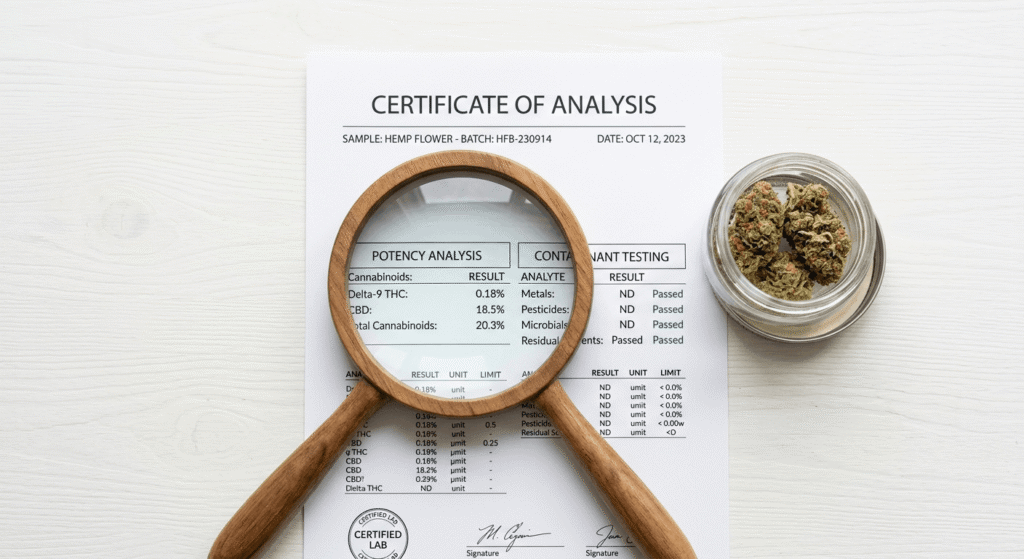
Every COA should include the product’s cannabinoid breakdown (percentages of THCA, delta-9 THC, and others), verification that delta-9 THC remains under 0.3%, and full lab details including batch number and testing date. Look for evidence of testing for contaminants such as heavy metals, solvents, and microbes. - Legal Role of COAs:
The COA is the definitive proof you, as a buyer or seller, are observing thca regulations. Many state laws require inclusion of a recent COA in each thca flower or hemp shipment. - Accessing COAs:
Reputable online brands, like those found via our lab results page, allow public viewing of current test results for every available product batch.
THCA Labeling and Documentation Requirements
Some states and major carriers further require modern, scannable labels or integrated QR codes, linking directly to digital COAs. These quality-control steps add a layer of security and make compliance checks easier for law enforcement at every stage of shipping.
Common Mistakes When Buying or Shipping THCA
When purchasing or shipping thca flower, users frequently make the following errors:
- Assuming federal legality means a product is always legal in your state, thereby overlooking stricter state or “total THC” bans.
- Failing to review or retain a recent COA for the specific product batch, increasing legal or safety risks.
- Overlooking labeling or missing documentation, a mistake that can delay packages or trigger seizures even in legal states.
- Sending orders through or into multiple states without considering those with restrictive thca regulations—one non-compliant state along the route can cause issues.
- Attempting to circumvent a vendor’s published policy about shipping to restricted areas, risking both legal penalties and permanent bans from reputable stores.
To keep current, check established blogs and always buy from regulated vendors with updated lab results and a transparent about page.
THCA Buying Decision Guide: Navigating State Laws and Compliance
Consumers and businesses looking for thca flower or related products should use this guide to make informed decisions within thca legal states and avoid unintentional violations:
- Check Your State’s Status Before Every Purchase
Refer to the above state-by-state table and confirm your state’s laws via the Department of Agriculture or health authority. Laws may change from one legislative session to the next. - Always Inspect and Match COAs
When browsing the shop, make sure the COA batch and product labeling correspond exactly to what you receive. - Understand and Follow Vendor Shipping Policies
Responsible vendors display an explicit list of restricted states or regions. Never attempt to buy or ship to a prohibited destination. - Prioritize Vendor Transparency and Customer Support
Choose sellers who make labeling, batch documentation, and lab certification easily visible on their site. For further clarity, reach out via the contact page. - Bulk & Wholesale Buyers:
For volume purchases, consult wholesale pricing and make certain your downstream uses are lawful for shipping, storage, and retail in your state.
Frequently Asked Questions
1. Is THCA legal in all states?
No. THCA legality varies significantly from state to state. More than a dozen states, including Idaho, Georgia, Texas (from 2026 onward), Colorado, Oregon, and Utah, enforce bans or severe restrictions on thca flower—often by applying a “total THC” rule or outright prohibitions. Always verify your own state’s current regulations before purchase.
2. Can I buy THCA flower online and have it shipped to my address?
You can purchase thca flower online if both the seller and your state permit it and the product’s delta-9 THC content is below 0.3%. However, thca legal states change frequently, and orders to restricted locations will be refused by responsible sellers. Double-check all vendor and state requirements before ordering.
3. What is the difference between ‘total THC’ and ‘delta-9 THC’ testing?
Delta-9 THC testing assesses only the amount of delta-9 present. In contrast, total THC testing counts both delta-9 THC and the volume that would result from heating (decarboxylizing) all THCA. States that use the total THC rule often restrict or prohibit thca flower, regardless of its initial delta-9 content.
4. Do I need a medical marijuana card to buy THCA?
No card is needed for thca flower in most permissive states if the product is Farm Bill compliant. However, in states applying total THC standards or with outright bans, only registered medical patients using a licensed dispensary may access thca products legally, if at all.
5. How can I verify if a THCA product is legal and safe?
Check for a recent, independently issued COA from an accredited laboratory for the specific batch you’re purchasing. The COA should confirm legal delta-9 THC levels and offer contaminant data. Ensure labeling matches both state and federal requirements. For further support, consult lab results or vendor contact pages.
Conclusion
THCA legality in the United States is a complex blend of the 2018 Farm Bill and diverse state laws and thca regulations. While many THCA legal states permit compliant flower and concentrates under delta-9 THC limits, the landscape is changing with increasing use of total THC rules and outright bans. To stay protected, always rely on updated local legislation, demand a valid COA, and only purchase or ship thca flower through trusted, compliant vendors. Staying informed ensures you maintain legal confidence as thca laws and regulations continue to evolve.