Quick Answer Box: A wholesale hemp compliance checklist in 2026 covers four areas: batch-specific COAs from ISO/IEC 17025-accredited labs, FDA-compliant product labels, verified USDA or state hemp licenses, and readiness for the H.R. 5371 Section 781 total-THC standard effective November 12, 2026. Missing one item puts distributors and retailers at risk of seized shipments, product recalls, or federal reclassification under the Controlled Substances Act.
What Is a Wholesale Hemp Compliance Checklist?
A wholesale hemp compliance checklist is a structured verification process hemp distributors, retailers, and smoke shops use to confirm every product meets current federal and state requirements. It covers lab testing documentation, product labels, active licensing credentials, and regulatory thresholds before stock ships or reaches shelves.
What THCA Testing and COA Standards Apply to Wholesale Hemp in 2026?
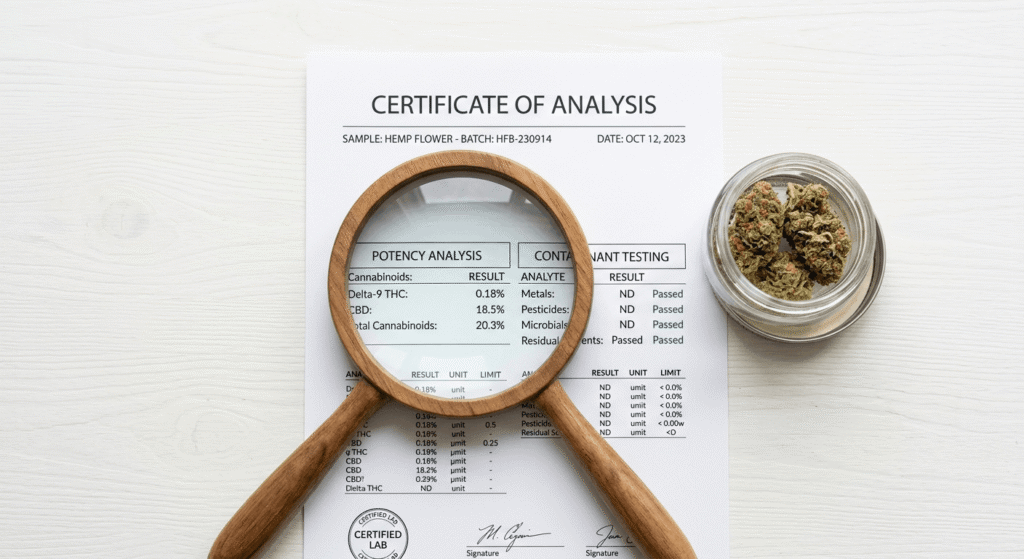
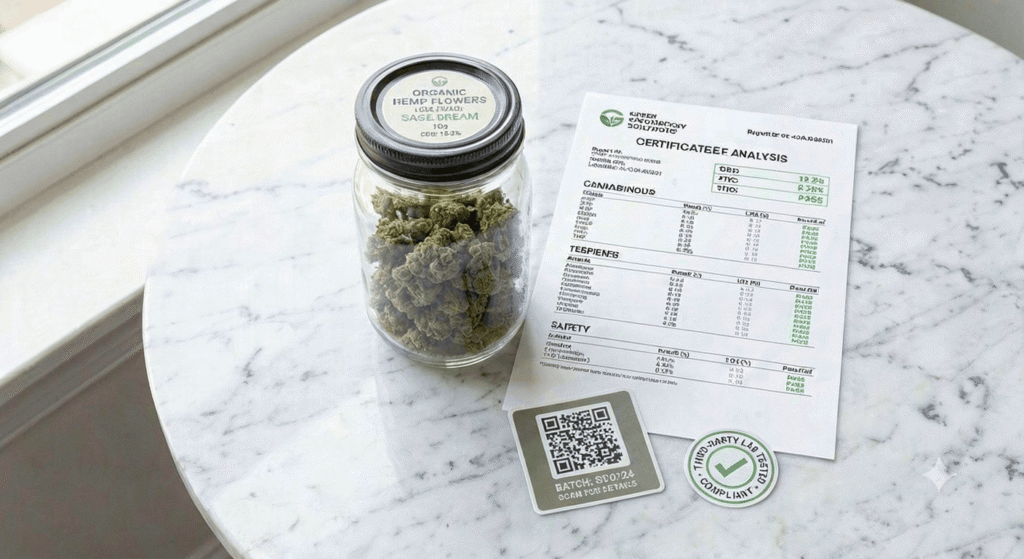
The Certificate of Analysis (COA) is the most consequential document in any wholesale hemp transaction. A compliant COA protects buyers from inheriting non-compliant inventory and shields sellers from the product recalls and enforcement actions that follow when test results don’t match labels.
Eight elements must appear on every batch-specific COA:
- Lab name and ISO/IEC 17025 accreditation number
- Product name, batch number, collection date, and test date
- Full cannabinoid profile listing delta-9 THC, THCA, CBD, CBG, and minor cannabinoids individually
- Total THC calculation using the post-decarboxylation formula: (THCA × 0.877) + delta-9 THC
- Contaminant panels for heavy metals, pesticides, residual solvents, mycotoxins, and microbials
- Measurement uncertainty reported alongside THC results, as required under 7 CFR Part 990 Subpart C
- A functional QR code or URL that resolves directly to the batch entry in the lab’s database
- Analyst signature and an independent reviewer’s second signature
Two details retailers consistently miss. The batch number on the COA must exactly match the batch number printed on the product label. A mismatch is a labeling violation in most states and sufficient grounds to reject an entire shipment. Separately, USDA requires hemp testing labs to be DEA-registered under the Domestic Hemp Production Program. Enforcement of that requirement was extended through December 31, 2026 due to lab capacity shortfalls, but confirming a supplier’s lab registration status is still part of sound THCA testing due diligence. USDA’s program requirements and the DEA laboratory directory are published at ams.usda.gov/rules-regulations/hemp.
Retailers sourcing verified product can cross-check lab results on file to confirm testing standards before placing wholesale orders.
How Does H.R. 5371 Section 781 Change Your Compliance Obligations?
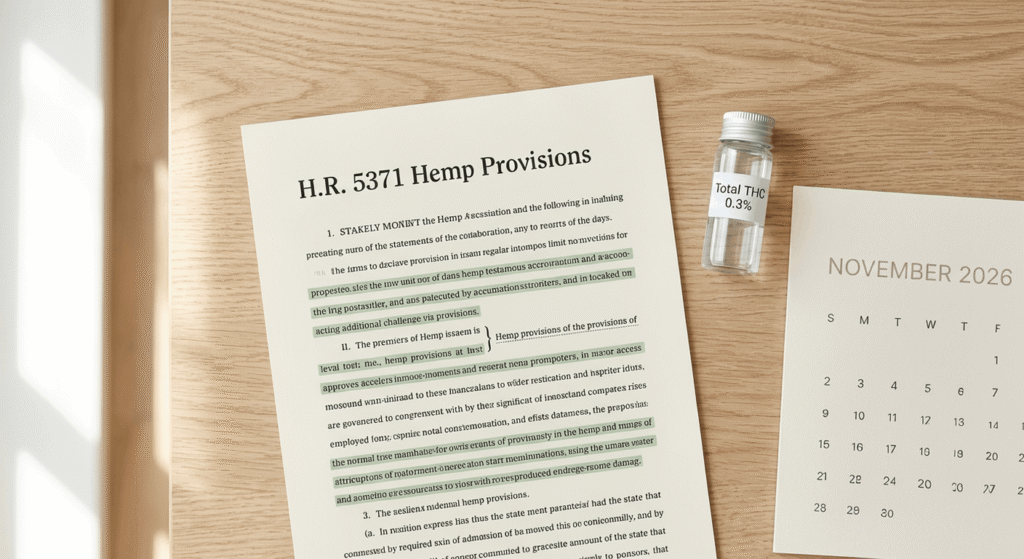
H.R. 5371 was signed into law on November 12, 2025, and its hemp provisions under Section 781 take effect exactly one year later. The law rewrites the federal hemp definition at the Agricultural Marketing Act level, and because the Controlled Substances Act excludes hemp by cross-reference, any product that stops qualifying as hemp on November 12, 2026 becomes a Schedule I controlled substance that day.
Three changes in Section 781 hit wholesale operations directly.
1. Total THC replaces delta-9 THC as the legal standard. The formula is (THCA × 0.877) + delta-9 THC, measured after decarboxylation on a dry weight basis, with a 0.3% ceiling. THCA flower testing at 20% THCA calculates to roughly 17.5% total THC under that math. Flower that sold legally in 2025 is non-compliant hemp on November 12, 2026 unless reformulated to meet the new standard.
2. Finished consumer products are capped at 0.4 mg total THC per container. Every final hemp-derived cannabinoid product intended for inhalation, ingestion, or topical use is subject to this limit based on the innermost retail packaging that holds the product. A standard 5 mg delta-9 gummy already fails. Distributors carrying edibles, tinctures, beverages, or vape cartridges need to verify every active SKU against this threshold now. October is too late to adjust purchase orders or reformulate labels.
3. Synthetic and converted cannabinoids are excluded from the hemp definition entirely. Delta-8 THC, delta-10 THC, and HHC produced through chemical conversion outside the cannabis plant no longer qualify as hemp regardless of their THC percentage. Any inventory containing these compounds requires immediate legal review before the November deadline.
One active complication: as of June 2026, the FDA has not published the official cannabinoid list it was required to release by February 10, 2026. That list would have clarified exactly which compounds fall under Section 781’s scope. Without it, operators face real ambiguity on certain formulations. The Congressional Research Service analysis of P.L. 119-37 is available at congress.gov for the exact statutory language. For retailers working through the sourcing implications, the Farm Bill compliance guide for retailers covers how the shift from delta-9 to total THC affects purchasing decisions product category by product category.
What Are the FDA Labeling, Packaging Compliance, and Consumer Safety Standards?
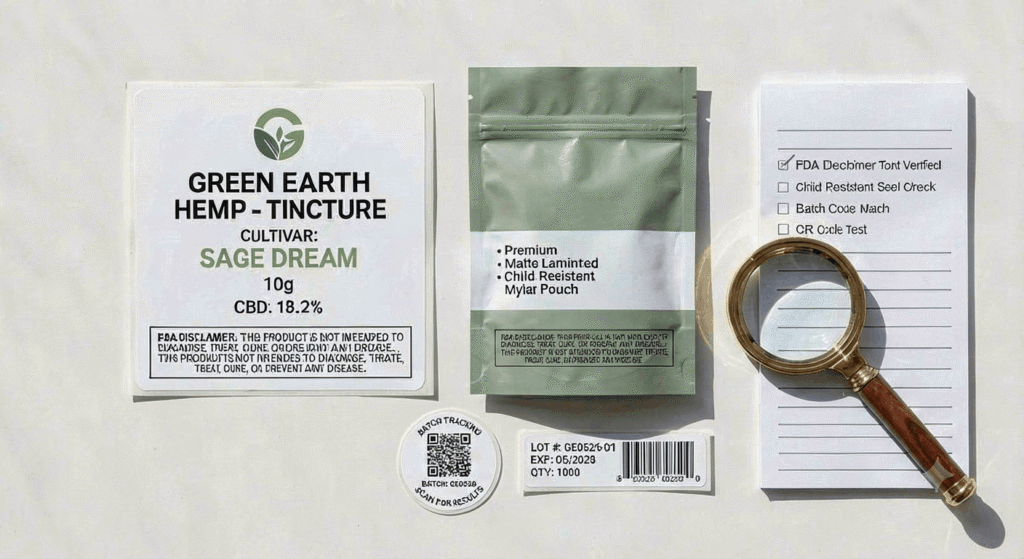
FDA retains full authority over hemp-derived products under the Food, Drug, and Cosmetic Act. That authority was not changed by H.R. 5371. Every retail-ready hemp product label must carry the product name, a full ingredient list in descending order by weight, the manufacturer or distributor’s name and business address, a batch number matching the COA, and the required FDA disclaimer: “These statements have not been evaluated by the Food and Drug Administration. This product is not intended to diagnose, treat, cure, or prevent any disease.”
For ingestible products, QR code access to the batch-specific COA is now legally required in multiple states. The QR code must link directly to the COA, not to a general website. Health claims are FDA’s primary hemp enforcement target. Statements like “for pain,” “for sleep,” or “for inflammation” have each triggered warning letters and constitute a direct consumer safety concern that can escalate from a notice to a product seizure.
Packaging has its own rules. Child-resistant closures are required for ingestibles in most states. Label design that mimics candy branding, uses cartoon imagery, or visually appeals to minors is prohibited under state hemp regulations in Texas, Colorado, and elsewhere. To review which product categories currently hold compliant wholesale pricing tiers, use that as a starting point when building your pre-November inventory plan.
Frequently Asked Questions
1. What is the total-THC formula wholesale hemp buyers need to apply before November 12, 2026?
The formula is (THCA × 0.877) + delta-9 THC, measured as a percentage on a dry weight basis. Under H.R. 5371 Section 781, the combined result must be at or below 0.3%. THCA flower testing at 15% THCA already produces a total-THC result of approximately 13.2%, which is more than 40 times over the legal ceiling.
2. Does a wholesale hemp distributor need a USDA license?
Cultivators and processors must hold an active USDA-approved state, tribal, or federal hemp program license. Distributors and retailers don’t hold cultivation licenses directly, but they must verify every upstream supplier does. Request the license number and cross-reference it against the issuing state’s Department of Agriculture database to confirm it’s current before any purchase order is signed.
3. What typically triggers a hemp product recall?
Hemp product recalls most commonly result from:
- COA results showing THC concentrations above the legal threshold
- Lab-confirmed contamination from pesticides, heavy metals, or microbials
- A batch number mismatch between the COA and the product label
- Prohibited health claims on packaging
Recalls can be voluntary or state-compelled. Batch-level chain-of-custody documentation from farm to retail unit is the most reliable safeguard against recall exposure.
Conclusion
Every item on this wholesale hemp compliance checklist carries real legal weight before November 12, 2026. COA accuracy keeps non-compliant inventory out of your supply chain. Verified USDA licensing confirms your suppliers can operate legally. FDA labeling standards protect against enforcement action at the retail level. And understanding H.R. 5371 Section 781’s total-THC standard gives you the lead time to act. Run this wholesale hemp compliance checklist against every open purchase order before that date.