Quick Answer: To spot a fake THCA COA, check five things fast: a searchable ISO/IEC 17025 accreditation number, a batch ID that matches the product, a QR code that opens the lab’s own report, correct total THC math, and full safety panels. Any missing piece means the certificate isn’t verified.
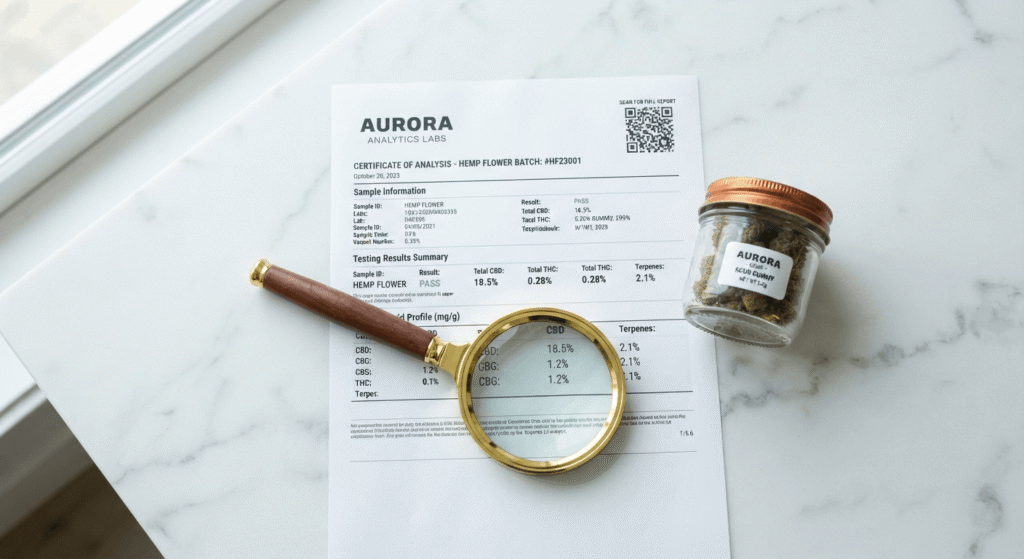
A single forged lab report can put non-compliant product on your shelves and your license on the line. Learning how to spot a fake THCA COA is now part of buying wholesale, not a nice-to-have. Brokers reuse old certificates, white out client names, and edit failing numbers into passing ones. Here are seven red flags that slip past most buyers, and how to check each one.
What is a fake THCA COA in cannabis?
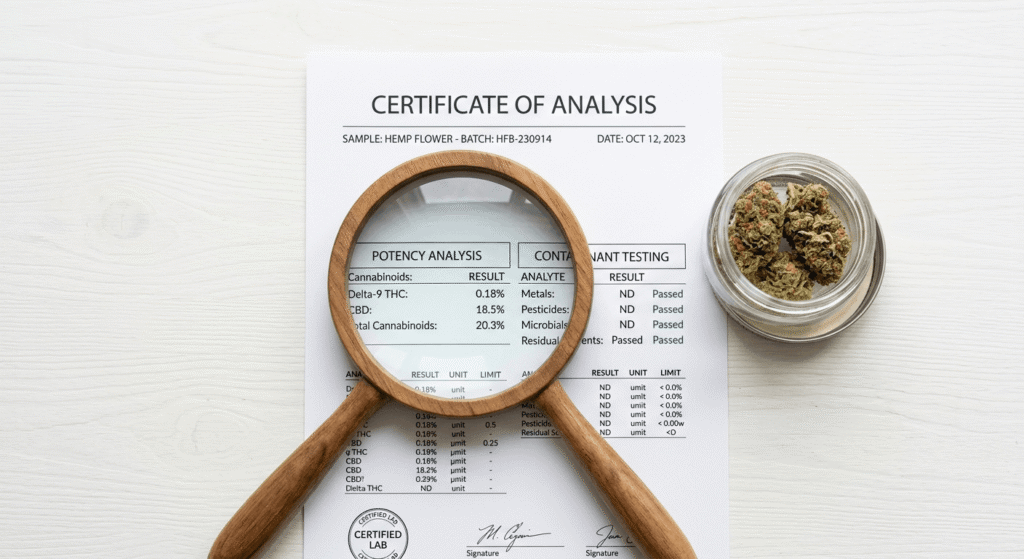
A fake COA in cannabis is a Certificate of Analysis that has been altered, fabricated, or reused so it no longer reflects real lab testing of the batch you’re buying. Common versions include edited PDFs with changed potency, reports recycled from a different lot, and documents from labs that were never accredited.
7 THCA COA red flags wholesale buyers miss
The obvious fake is easy to catch: no COA at all. The expensive fakes are the ones that look complete. These THCA COA red flags show up on documents that pass a quick glance but fall apart the moment you verify the lab, the batch, or the math behind the numbers.
1. No verifiable ISO 17025 accreditation number
A lab name in the header proves nothing. Real testing labs print an ISO/IEC 17025 accreditation number, and that number should be searchable in the accrediting body’s public directory, usually A2LA, PJLA, or ANAB. A COA that says “ISO 17025 accredited” with no number to look up is making a claim you can’t confirm. Check the footer for the accreditor’s logo, then search the number yourself.
2. A batch or sample ID that doesn’t trace to the lot
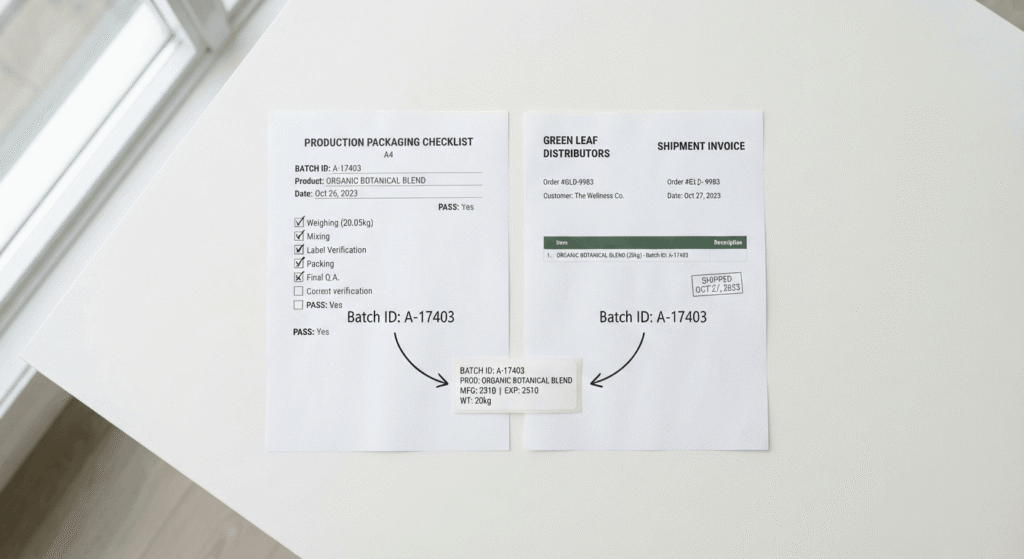
Every legitimate COA references a specific sample or batch code. That code is the chain of custody between the test and the flower. If the certificate has no batch ID, or the ID doesn’t match the lot on your invoice, the report could belong to a different run entirely. Brokers often recycle one strong COA across unrelated inventory, so match the batch before anything else.
3. Total THC math that’s missing or doesn’t add up
This is the red flag wholesale buyers miss most, and it’s the one that decides compliance. Total THC is calculated as (0.877 × THCA) + delta-9 THC, and a real COA spells that calculation out. If the report shows a raw THCA percentage but hides the total, or the printed total doesn’t match the formula, treat it as potency testing fraud until proven otherwise. Capturing this number is the whole point of the difference between THCA and THC.
4. A QR code that doesn’t open the lab’s own report
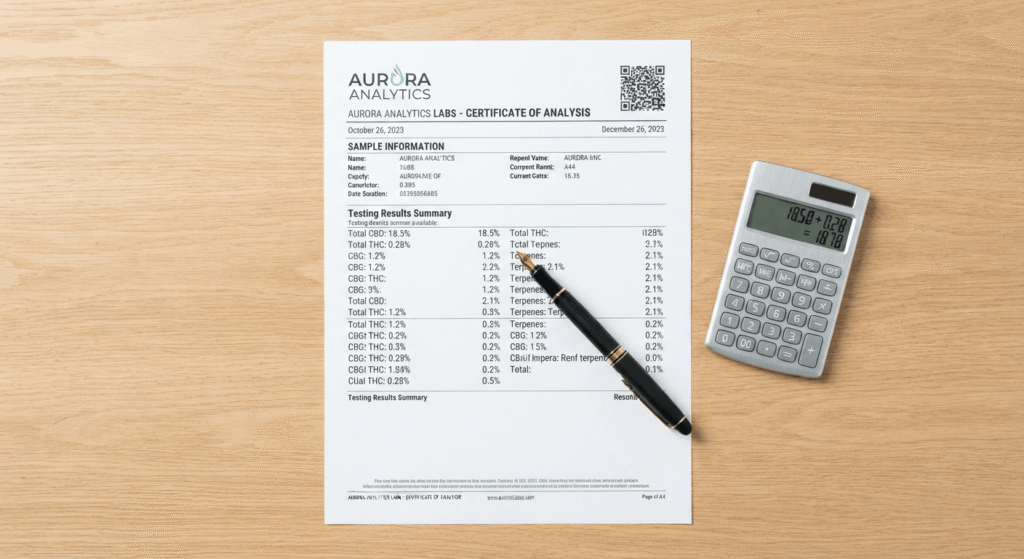
Scan it. The QR code or link should load the exact batch report inside the lab’s own portal. If it opens a homepage, a generic PDF folder, a dead page, or a different product’s results, the document has been cut loose from its source. A certificate you can only verify through a channel the seller controls is not verified at all. Cross-check it against the published lab results for that batch.
5. Signs the PDF has been edited
PDFs edit cleanly, and the changes rarely show at normal zoom. Open the file at 200 percent or higher and look for font shifts, misaligned characters, or pixel smudging where a number sits over another. Whited-out client names, mixed fonts, and off formatting are all signs someone turned a failing result into a passing one, and the layout of a real lab report stays consistent throughout.
6. Results that look too clean to be real
Analytical instruments don’t produce round numbers. Cannabinoids reported at exactly 30.00 percent, contaminants logged as 0.00 instead of ND, or the same values repeating batch after batch all point to data that was set rather than measured. Watch for panels where every contaminant lands just under the action limit. Real results scatter. Numbers that park neatly below every threshold suggest the sheet was adjusted to pass.
7. Potency numbers with no safety panel
A COA that lists only cannabinoids is not a full COA. Potency-only testing is cheaper, and some suppliers use it to cut cost while still handing you an official-looking document. Without pesticides, heavy metals, microbials, mycotoxins, and residual solvents, you have no idea whether the flower is safe or whether it clears state action limits. A missing safety panel is a failed test you simply can’t see yet.
How do you validate a THCA COA before you buy?
COA validation takes about five minutes per batch once you know the sequence. Run it before the first order with any new supplier, then spot-check on reorders. It’s the workflow experienced buyers use for THCA vendor vetting when sourcing THCA flower wholesale at volume.
- Match the batch or lot ID on the COA to the code on your invoice and packaging.
- Find the ISO/IEC 17025 accreditation number and confirm it in the accreditor’s public directory.
- Scan the QR or open the link and check that it lands on that exact batch report in the lab’s portal.
- Recalculate total THC yourself using the federal decarboxylation formula, (0.877 × THCA) + delta-9 THC, and confirm it sits at or below 0.3 percent on a dry weight basis.
- Confirm the full safety panel is present and marked Pass against action limits.
- Ask for two or three consecutive batch reports, then call or email the lab to confirm the report number exists.
Side by side, the difference is usually obvious:
| COA element | Legitimate report | Red-flag report |
|---|---|---|
| Accreditation | ISO/IEC 17025 number you can search | Lab name only, or none |
| Batch ID | Matches your invoice lot | Missing, or from another run |
| Total THC | Shows the (0.877 × THCA) + delta-9 math | Raw THCA only, or math that fails |
| Safety panels | Full contaminant testing, marked Pass | Potency only |
Where THCA legal status leaves wholesale buyers in 2026
The ground under THCA is shifting, and it changes how much a clean COA is worth. Under the 2018 Farm Bill, hemp means cannabis at or below 0.3 percent delta-9 THC on a dry weight basis, which is how high-THCA flower has sold as hemp. That standard changes on November 12, 2026. Section 781 of P.L. 119-37 redefines hemp by total THC, including THCA, and caps finished products at 0.4 milligrams of total THC per container. A certificate showing high THCA and low delta-9 can meet today’s rule and miss next year’s. Keep your Farm Bill compliant THCA documentation current, confirm the changing federal hemp definition yourself, and watch your state, since several already test on total THC.
Frequently Asked Questions
1. How can you tell if a THCA COA is real?
Verify three things the seller can’t fake: the ISO/IEC 17025 accreditation number in the accreditor’s public directory, a batch ID that matches your product, and a QR code that opens that exact report in the lab’s portal. If all three check out and the safety panel is complete, the COA is trustworthy.
2. Does a QR code guarantee a COA is legitimate?
No. A QR code is only a link, and links can point anywhere. Treat a QR code as valid only when it:
- Opens the lab’s own portal, not the brand’s homepage
- Loads the exact batch you’re reviewing
- Shows a report number you can match to the document
A code that lands on a generic PDF proves nothing on its own.
3. Is THCA still legal to buy wholesale in the US?
For now, THCA flower is sold under the 2018 Farm Bill’s delta-9 standard. That changes on November 12, 2026, when federal law shifts to a total THC definition that counts THCA. Several states already apply total-THC testing, so THCA legal status in wholesale depends on both the date and where you operate.
Conclusion
Knowing how to spot a fake THCA COA protects your license, your buyers, and your margin in a market where forged paperwork is common and the rules are tightening. Verify the lab, match the batch, run the total THC math, and never trust a certificate you can’t confirm at the source.